How Young Is Too Young for Technology in the Music Classroom?
I interviewed a wonderful elementary music educator yesterday for my podcast and the subject of student use of technology came up in our conversation. Specifically, the teacher referenced her music classroom as a refuge at the school - a place that she has designed where students can move, sing, perform, and experience music. As a part of her design, she purposely tries to have her students use as little technology as possible. This stems from the fact that her students often use Chromebooks during almost every other class during the day. Unless it is for a very specific purpose - like composing or taking a quiz - she tries to make her music classroom as analog as possible. While it may sound heretical coming from me - I completely agree with her. The question of how young is too young for technology in the music classroom often comes up when I speak with elementary music educators. How early should we introduce technology to our students? Kindergarten? Elementary school? Or should we wait until they are older and more independent? The answer depends on who we are talking about, as well as why are we using it? I thought I would take this opportunity to write down my thoughts on this essential question. Here goes…
When it comes to teacher use, I believe that it is never too early to use technology in a music classroom. Technology that can help us plan more effectively, organize materials, assess student work, or communicate with families has an immediate and positive impact on instruction. As someone who taught Pre K-8 music for 15 years, I know that there is almost zero time during a school day (or after school) to adequately plan out every class - especially when you are often teaching 10-12 classes per day. Having online tools and curriculum available to you at all times is extremely helpful. I would argue strongly that a kindergarten music teacher using digital tools behind the scenes is not replacing strong teaching. They are strengthening it. In many cases, younger students benefit the most from well-prepared, clearly structured lessons, and technology often plays a quiet role in making that possible. But the conversation shifts when we talk about students using technology directly.
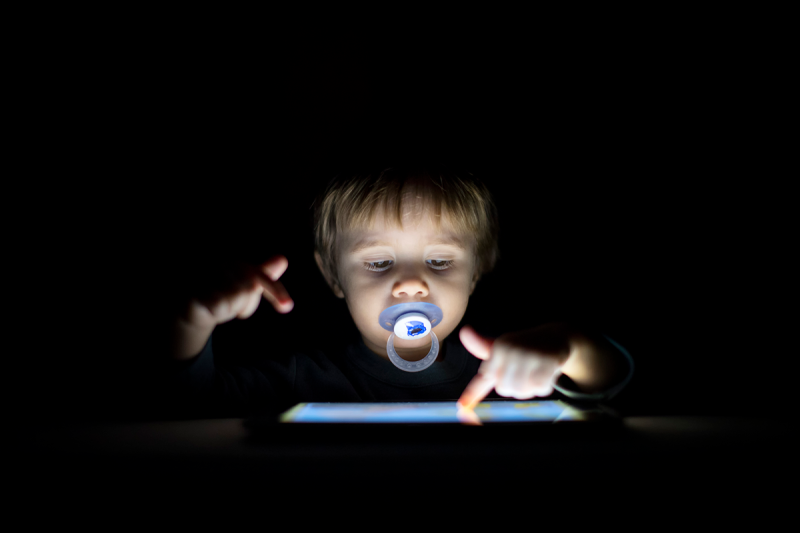
There is a growing assumption that earlier exposure is always better. If older students can compose, record, and receive feedback using digital tools, it can be tempting to introduce those same tools as early as possible. But the better question is not whether students can use technology. It is whether they should. Music learning is inherently physical, aural, and social. Singing, moving, listening, and playing together are not just activities. They are the foundation of how students understand music. When technology is introduced too early, it can unintentionally shift the focus away from those experiences. On a personal level, nothing makes me more concerned about kids today than when I go out ot a restaurant and I see toddlers with iPads in their hands at the dinner table - never once looking up or engaging in conversations. They are wrapped up in their own little world, and not enough is known about the long term effects of this overexposure to technology. When these same kids get to school, it is essential in my opinion, that they spend as much time as possible off screen - engaging with others and interacting with the world around them. A music classroom is one of the best places for that to happen in an elementary school. That said, at a certain age (I personally think that 3rd grade is the perfect time) there are opportunities for students to engage with technology in a very meaningful and positive way.
Consider a simple composition activity. Young students exploring rhythm through body percussion, manipulatives, or classroom instruments are actively engaged with sound and with each other. Introduce devices too soon, and that same activity can become more about screens than sound. The experience may look more advanced, but the musical learning is often less connected and less immediate. This does not mean that technology has no place in student learning. It means it should be used with clear purpose. Technology can offer meaningful advantages when it allows students to do something they otherwise could not. Recording and playback can help students hear themselves more clearly. Certain tools can provide individualized feedback or allow students to create and share work in new ways. In these cases, technology is not replacing the musical experience. It is extending it.
A technology platform like MusicFirst Elementary fits really well within this approach because it is designed to support musical learning without replacing it. Rather than putting technology at the center of the experience, it gives teachers flexible ways to introduce creativity, listening, and exploration in age-appropriate ways. Activities can be short, guided, and purposeful, allowing students to engage with sound while still prioritizing singing, movement, and hands-on music making. It also gives teachers the ability to manage and structure these experiences carefully, deciding when technology adds value and when it is better to step away from the screen. In that sense, it aligns with the idea that technology should extend and support musical understanding, not compete with it. What I enjoyed hearing most from my podcast guest yesterday, who uses MusicFirst Elementary every single day with every single one of her classes, is that she often uses one or two things from the curriculum, and then moves on to other aspects of what she is trying to teach. She uses it as supplementary material that supports what she is trying to achieve with her students. She dips in and out. She uses it as an opening activity. Her students take some of the quizzes as a class. She uses some of the games as a reward at the end of the class period. I love that.
The key to technology integration at the elementary school level (or any level for that matter) is being intentional. Before introducing any tool, it is worth asking a simple question. Does this deepen the musical experience, or does it distract from it? If the same objective can be achieved in a more direct, engaging way without technology, then it is reasonable to leave the device out of the lesson. This is SO important with younger students. Their ability to focus, listen, and interact with others is still developing. Technology can support those skills, but it can just as easily compete with them. Without careful planning, it often becomes the center of attention rather than a support for learning. None of this is about resisting innovation. It is about using the tech tools you have available to you wisely. As music educators, we have a responsibility to preserve the core of music making while also embracing tools that genuinely enhance it.
So how young is too young? For teachers, there is no minimum. Use whatever tools help you teach more effectively. For students, the answer requires judgment. Begin with sound, movement, and human interaction. Then introduce technology when it clearly adds value to those experiences. When we try to achieve that balance, technology becomes what it should be in every music classroom: a supportive tool for great teaching, not a substitute for it.
What do you think?