Teaching Improvisation with MusicFirst

Back when I was teaching instrumental music at the middle school level, I had the pleasure of teaching a Jazz Ensemble. It was the most fun aspect of my job - hands down. The students in the ensemble were among the best and brightest in the school, the music we played was engaging and exciting to perform, and I even ran a series of Jazz Night concerts for 10 years, inviting some of NYC’s finest jazz musicians to perform on our middle school stage, with my ensemble serving as the opening act. The very first of those concerts featured a dear friend of mine, and exceptional musician, Erik Lawrence. Erik is the son of famed jazz saxophonist, Arnie Lawrence - who founded the New School for Jazz and Contemporary Music in 1986. My only real weakness as a jazz ensemble director was that I had a very difficult time teaching improvisation. My students simply read the written solos rather than even trying to improvise. The main reason for this was that I, as a tuba player, knew how to improvise bass lines from playing tons of gigs that had no music to read off of, but melodic improvisation was something that I simply didn’t do. Might sound crazy, but it’s true. When I was creating content for the MusicFirst Classroom, I tried to help out other music educators who might be experiencing the same difficulty, so I commissioned Erik to write a course on how to teach students to improvise - from the very first note.
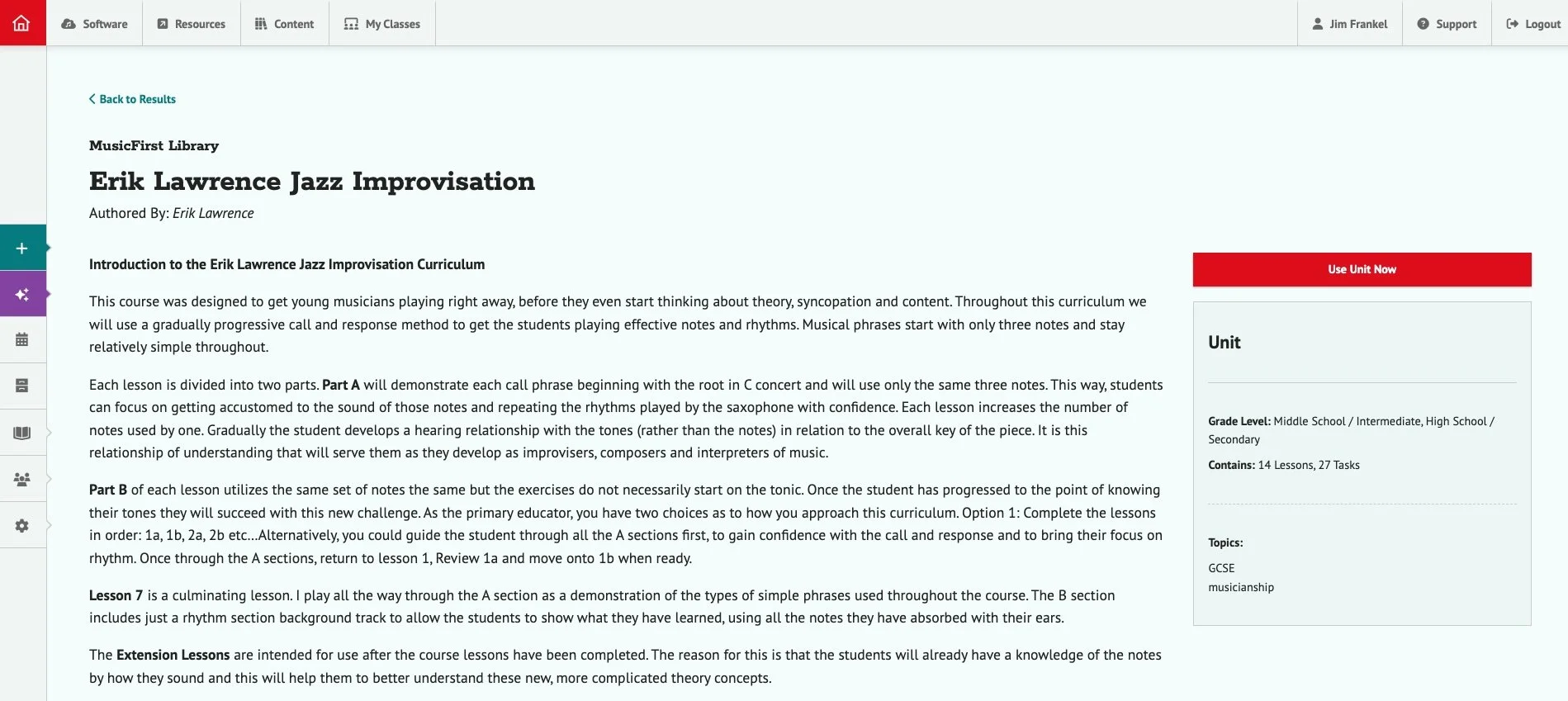
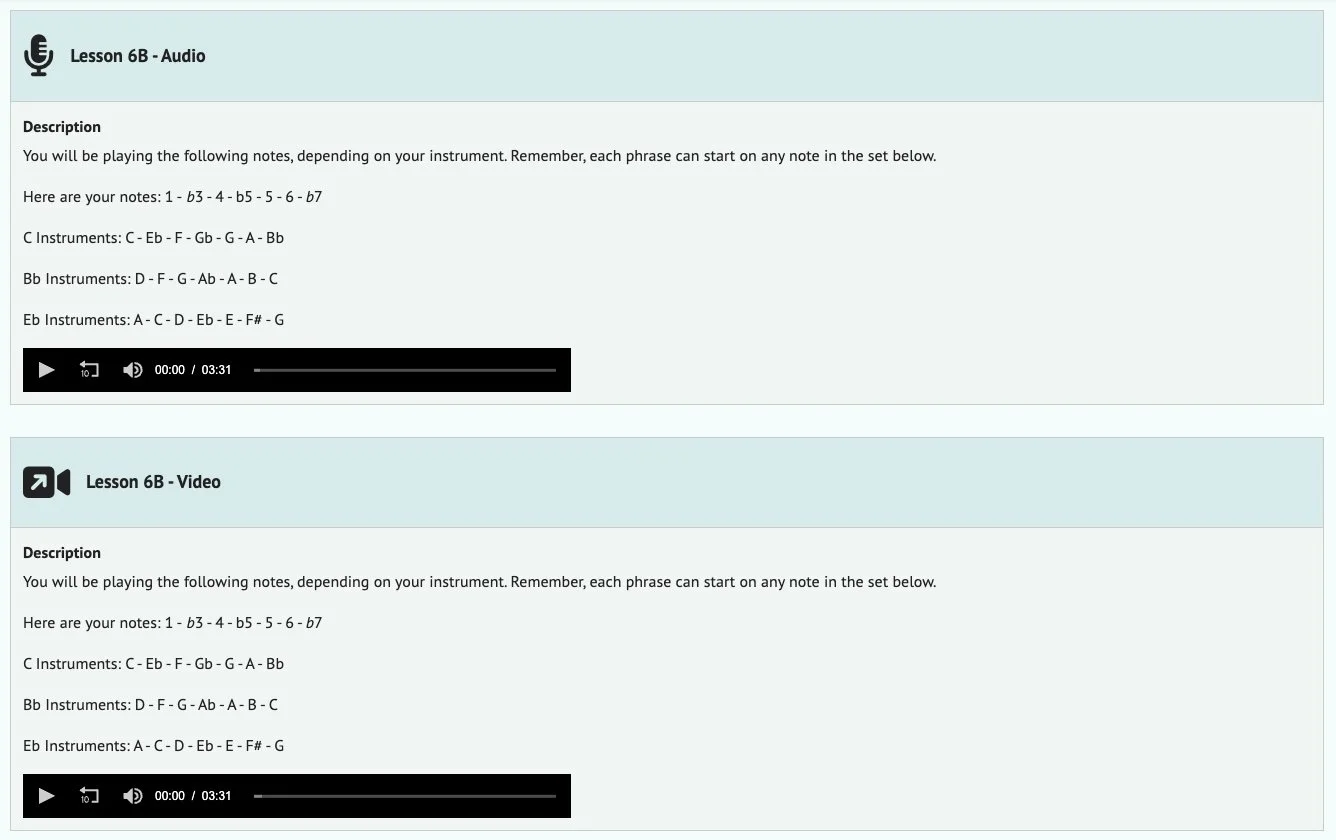
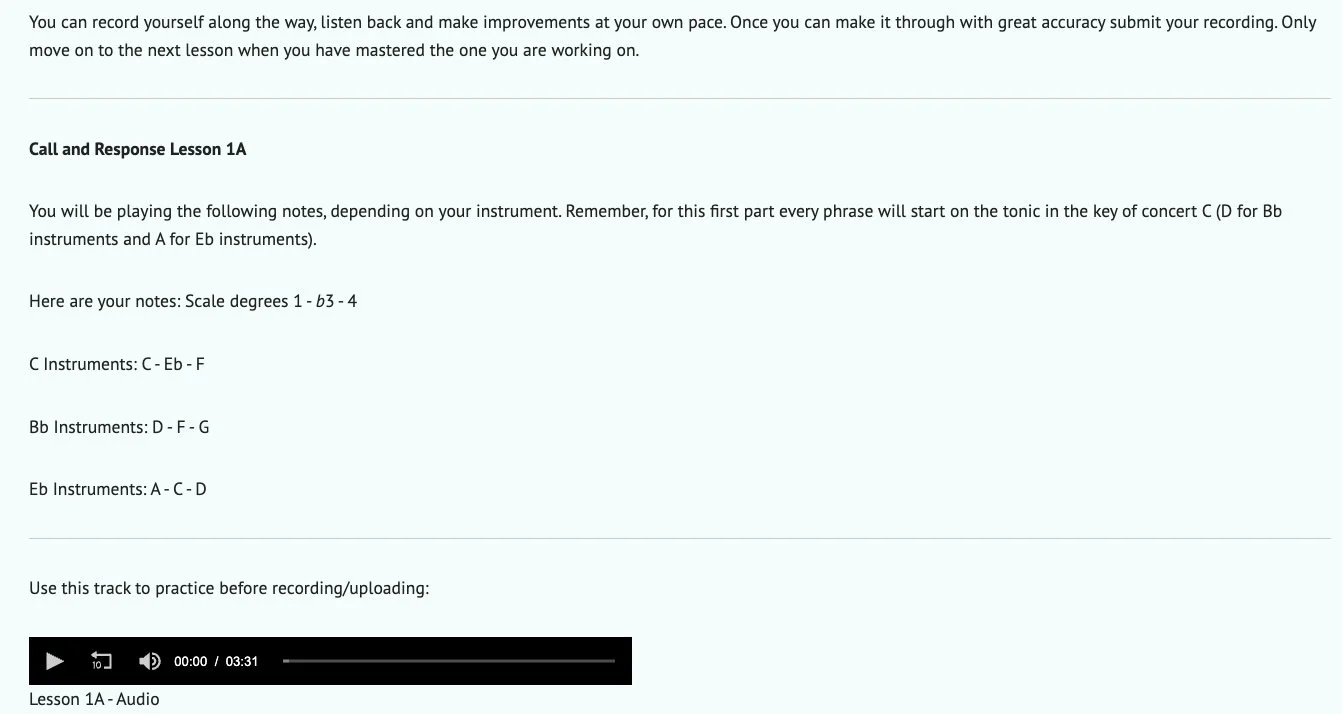
The Erik Lawrence Jazz Improvisation course is designed to get students playing and improvising immediately. Instead of beginning with explanations, it starts with listening and responding. Using a carefully structured call and response method, students learn by doing. From the first lesson, they are actively making music, which builds confidence and engagement right away. I love how it starts from just one note and gradually builds up to a full scale - slowly - step-by-step. Every lesson includes backing tracks that students can play along to while they start experimenting with improvisation. I love this because I think one of the main reasons that I never went into having my students try improvising is that when you first get started, it’s pretty rough. Let’s be honest here - it can make the best player in your band sound pretty bad, and I don’t know too many students who want to volunteer for that kind of experience. I know that I could have approached in a different way, but I just didn’t know how to. Having students practice improvising at home, without anyone around to hear it, is a great way to get started. Every lesson has the students record themselves along with the backing track, and then submitting those recordings to their teacher for feedback. They can record either audio or video. Or both. This, in my opinion, is a wonderful way to approach improvisation.
Every lesson is divided into two parts. In Part A, students listen to short phrases that begin on concert C and are built using just three notes. This limited note set allows students to focus on rhythm, tone, and accuracy without feeling overwhelmed. They begin to recognize how these notes sound within the context of the key, developing their ears in a natural and meaningful way. Because they are repeating musical phrases rather than isolated notes, students quickly begin to sound stylistically authentic. As the lessons progress, one additional note is introduced at a time. This gradual expansion helps students build a vocabulary without confusion. Instead of memorizing scales, they develop a sense of how notes relate to one another through sound. This understanding becomes the foundation for more advanced improvisation, composition, and musical interpretation.
Part B of each lesson builds on these fundamental skills. Students use the same group of notes, but the phrases do not always begin on the tonic. This small change encourages deeper listening and pushes students to think more musically. They begin to react, anticipate, and make decisions in real time, which is the essence of improvisation. The course is also flexible for teachers. You may choose to move through each lesson in order, alternating between Part A and Part B, or you can focus on all of the Part A sections first to build confidence and rhythmic accuracy before introducing the added challenge of Part B. This adaptability makes the course effective in a variety of classroom settings.
Lesson 7 serves as a culminating experience. Students hear a full demonstration of the types of phrases they have been working on, followed by an opportunity to improvise over a rhythm section track. By this point, they are not relying on written notes. They are using their ears and their growing musical instincts. The extension lessons that follow introduce more advanced theoretical concepts. Because students already understand the sounds of the notes they are using, these concepts are easier to grasp and apply.
This course is the perfect way to help celebrate Jazz Appreciation Month by getting students to actively participate in what makes jazz so special. The Erik Lawrence Jazz Improvisation course helps make that connection by giving students a clear, approachable path into improvisation, one sound at a time. You can find the Erik Lawrence Jazz Improvisation course in the Band section of the MusicFirst Content Library. If you’re not a current customer, you can sign up for a FREE 30 day trial and start using this course with your students today!