Resource: MINIM-UK
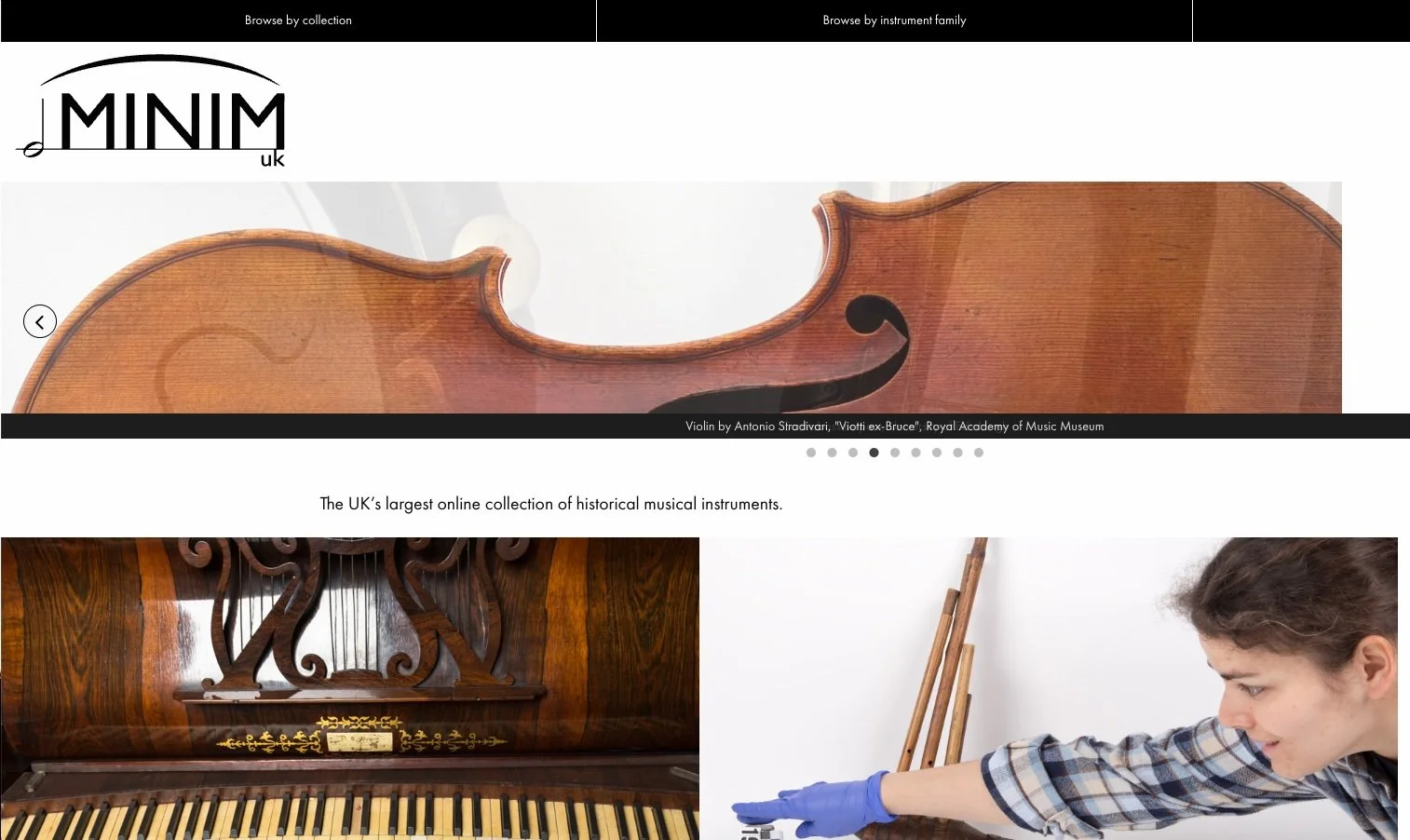
For today’s post, I wanted to share the incredible Virtual Instrument Museum that was curated for a long time by the Wesleyan University, but sadly, it appears that the site is no longer up and running. So I looked for similar sites and quickly found one from the UK. MINIM-UK stands for Musical Instruments Interface for Museums and Collections and is a virtual musical instrument museum that makes nearly twenty thousand historic instruments accessible online. The site was launched in 2017 as a collaborative project led by the Royal College of Music with partners including the Royal Academy of Music, the Horniman Museum and Gardens, and the University of Edinburgh. It consolidates instrument data from more than one hundred collections across the United Kingdom into a single searchable resource. And it’s pretty amazing.
For teachers, MINIM-UK offers a HUGE archive of visual and technical information that can support instruction in a variety of ways. Instruments range from well-known European examples to rare or unusual items, and many entries include photographs along with basic descriptive data. The site also features audio or video examples for select instruments, allowing students to hear as well as see examples from the past. It would be MUCH better if there were more of these AV files on the site, but that’s why we have Focus On Sound!
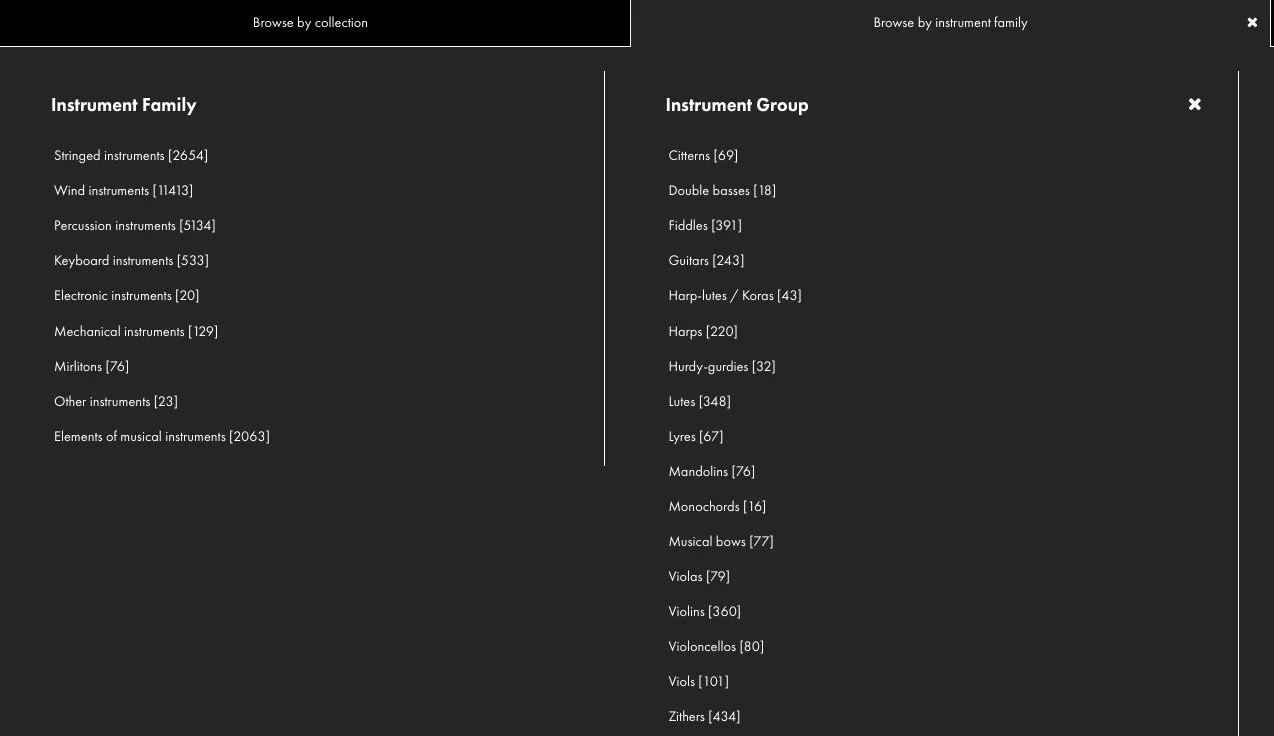
When you first visit the MINIM-UK homepage, you will notice a menu across the top with options such as “Browse by Collection,” “Browse by Instrument Family,” and “Search for Instruments.” These search options are the most useful way to navigate the site for classroom purposes. You can choose to explore by instrument family, instrument group, or specific items. Under “Instrument Family,” for example, selecting “Strings” will display catalog entries for viols, violins, lutes and other related instruments. “Instrument Group” lets you narrow the view by functional categories such as bowed, plucked or wind. Clicking “Instrument” will show an alphabetical list of all indexed items. I decided to click on one of my personal favorite instruments, the Hurdy Gurdy, and this is what I got:
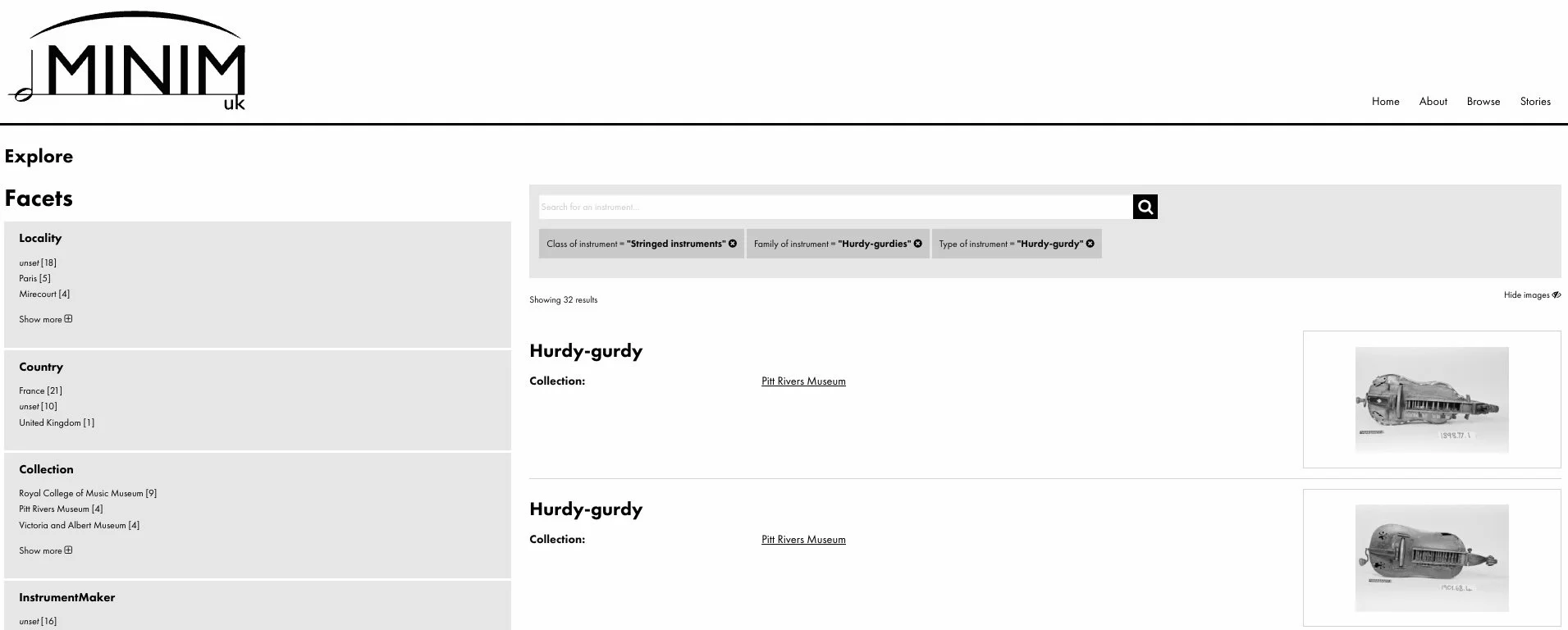
Once you have applied a filter or selected a search category, results display as a list of instrument entries with thumbnail images. Clicking on any thumbnail opens a detailed record page. On the record page you will find larger images and structured information such as date, maker, dimensions, materials and collection location. Some records also link to audio or video files that demonstrate the instrument’s sound or use. These pages are clear to interpret and can be projected in class, linked in a learning management system like the MusicFirst Classroom, or used for student research assignments.
The “Stories” section of the site highlights selected instruments and collections with narrative descriptions. Teachers can use these stories to create assignments or classroom discussions that go beyond technical details. For example, a story about a rare baroque wind instrument can lead into a comparison with its modern counterparts and prompt students to consider how design changes affect sound and repertoire. In addition to the searchable collection, the “About” section explains the project’s background, partners and goals. It makes clear that the purpose of MINIM-UK is to increase public access to instruments that might otherwise remain unseen in storage or remote museums. This historical context can be a useful introduction for students before they begin using the resource for research. Personally, if I were still teaching I would use this site to find and save images of instruments that might not be readily available (or even known).
Using MINIM-UK is FREE and requires only an internet connection and a browser. No login or subscription is needed. For music teachers aiming to connect performance with history and culture, the site offers a structured and credible digital archive that supports accurate, evidence-based teaching. I hope that you can use it with your students!