The AI Backlash in Education Has Officially Begun
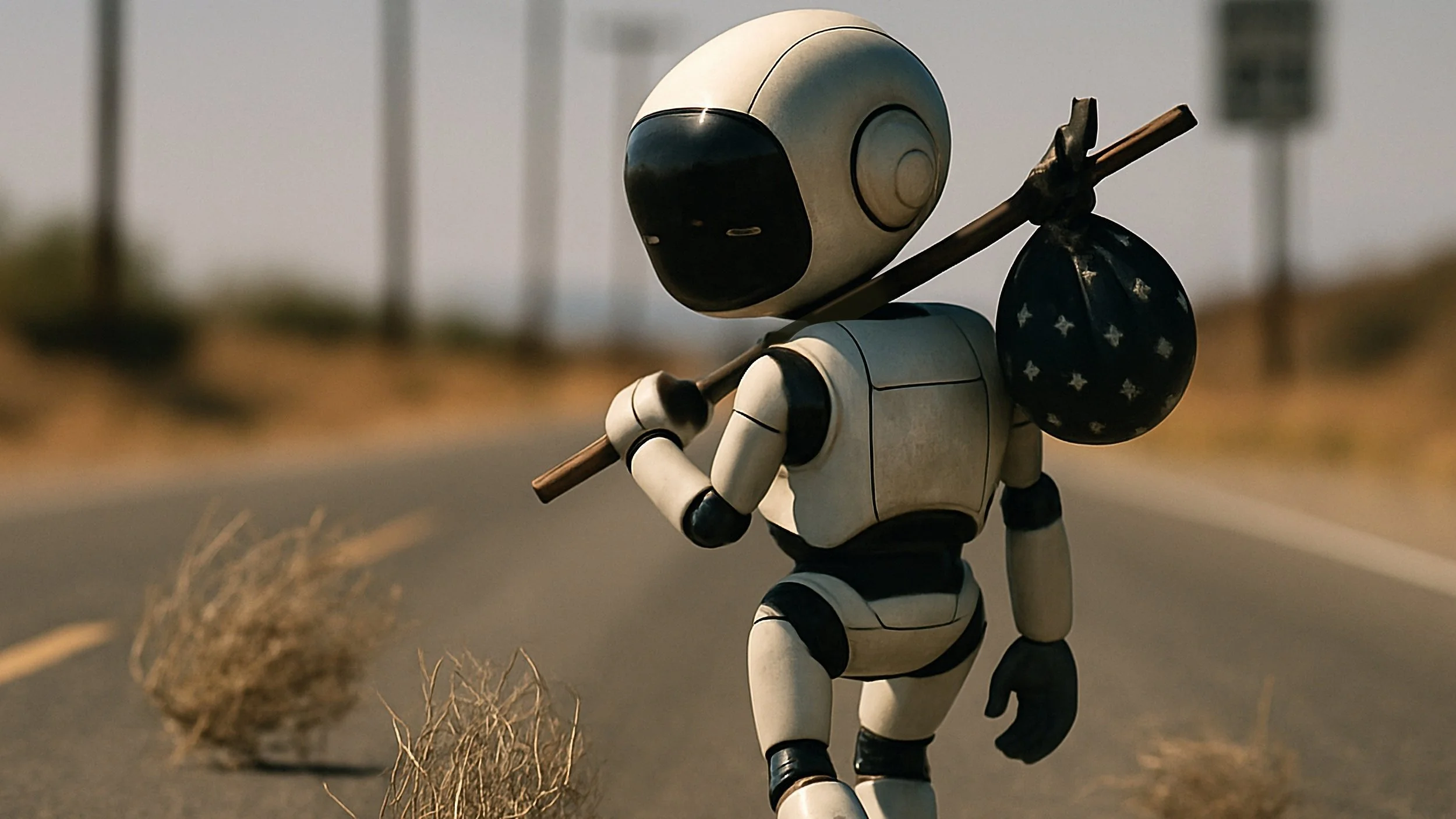
Over the past few years, generative AI has dominated nearly every conversation in and around education. How teaching and learning will radically change - customized curriculum, individual tutoring, the whole nine yards. The hype is real. So many of the conference sessions, webinars, podcasts, and school board meetings all seem to carry the same message that generative AI is about to completely transform teaching and learning. I have spent these past few years giving keynotes and sessions myself about Generative AI, and I have noticed that not only are the sessions always jam packed - I often see two distinct reactions to what I show: complete awe for any tool that makes teaching a little bit easier, and complete disdain for any tool that threatens the creative process and assessment for students. I always emphasize that music teachers must be in control of how or even if generative AI tools get introduced into their instruction. But lately though, especially in the media, I am seeing something very clearly. The students in our classrooms are rejecting generative AI altogether. Sure they may be using it to homework assignments that they think are busy work, but I think that there is a real shift in the way students think about it. Perhaps it is because it is a direct threat to the careers that they would someday like to have, or maybe they are looking at these tech companies as perpetrators of the greatest threat to society and their childhoods. Perhaps it is because the servers required to power this technology are having a tremendously bad impact on the environment. My own kids certainly feel that way. In my opinion, the AI backlash has officially begun, and it is being led not by teachers or administrators, but by the students.
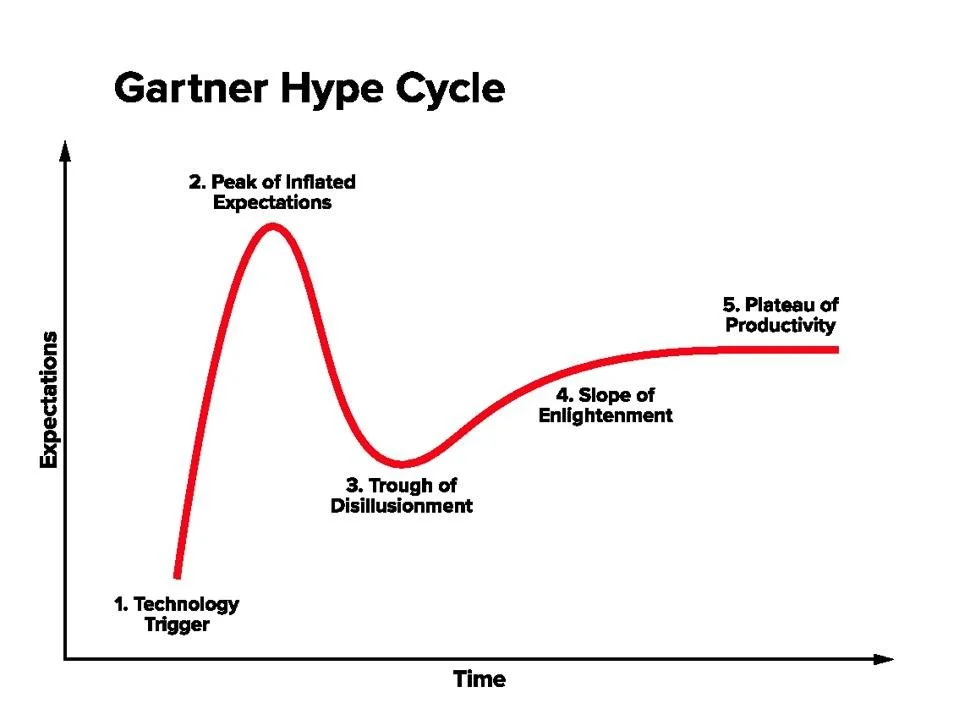
I have spoken with countless music educators over the last year who are genuinely interested in AI tools and curious about the possibilities, but who are also becoming increasingly exhausted by the nonstop marketing and overpromising surrounding them. What started as excitement is beginning to sound more like skepticism. In some schools, it is turning into outright resistance. Honestly, I think education may have finally reached the Trough of Disillusionment when it comes to AI. For those unfamiliar with the term, the Trough of Disillusionment comes from Gartner’s technology adoption cycle. It describes the point where inflated expectations crash into reality. The hype fades. People become frustrated. The limitations become impossible to ignore. The organizations that survive that stage eventually find practical and meaningful uses for the technology, but only after the fantasy phase ends. I think that at least in education, that is exactly where we are right now.
One of the clearest signals for me that shows what our students really think about generative AI came during this year’s commencement season. Across the country, graduation speakers promoting AI and automation were met with loud boos from students. That’s pretty profound in my opinion. Young people are usually the first group to embrace new technology. Instead, many graduates seemed openly irritated by speakers enthusiastically talking about AI disrupting industries and reshaping careers while students themselves are preparing to enter an uncertain job market. At several universities, commencement speakers discussing AI as an exciting inevitability received negative reactions from graduates who were clearly not in the mood to hear cheerful predictions about automation replacing parts of the workforce. In one speech, students booed references to AI innovation. In another, graduates pushed back against comments about technological disruption. I think what was really amazing was the reactions from the speakers themselves. They seemed shocked that they were being booed for mentioning AI. My personal favorite moment was at the Grand Valley State University commencement, when Steve Wozniak - co-founder of Apple Computers - gave his speech about AI. He obviously knew his audience.
These really interesting moments stood out to me because they clearly illustrate a deep frustration, as well as anxiety, fatigue, and even distrust of companies like OpenAI, Anthropic and Meta, and I think that K-12 schools and universities seem to be going through the same thing right now. When ChatGPT first exploded into public awareness, many educators reacted with a combination of amazement and panic. Some immediately predicted the end of writing assignments. Others believed AI tutors would finally solve personalized learning. Ed Tech companies rushed to add “AI powered” labels onto nearly every product imaginable, whether the feature was actually useful or not. Then reality arrived. Amazingly, companies like Khan Academy aggressively marketed an AI tutor named Khanmigo and then realized that students weren’t really that interested in using it at all. Massive amounts of money were invested into making this tool, and the students simply rejected it.
Teachers have also discovered that AI confidently generates inaccurate information all the time - what is commonly known as AI hallucinations. Additionally, district learned that privacy and student data concerns were far more complicated than the vendors claimed. That’s hugely problematic when it comes to adoption. Many districts invested in AI detection tools only to discover that many of them were very unreliable. Students quickly found ways around those systems anyway through “humanizer” tools and endless rewriting platforms designed specifically to avoid detection. Cheaters gonna cheat! Meanwhile, teachers started asking a much more important question. If students can instantly generate essays, presentations, summaries, discussion responses, coding assignments, and even creative works, what exactly are we measuring anymore? How well students can use generative AI tools?
None of this means AI has no place in education. Far from it. I still believe many generative AI tools will eventually become widely used by teachers and students. There are practical applications helping educators save time, organize materials, differentiate instruction, and support student creativity. Tools like MagicSchool AI have been adopted by the majority of school districts in the US. The main reason? They help teachers with the administrative aspects of their jobs so that they can spend more time teaching. Other AI-powered tools like Canva help teachers create engaging teaching resources.
All of that said, I don’t think that schools are rejecting technology at all. Teachers are not anti generative AI. Students are not afraid of innovation. What I do think students and educators are pushing back against is the idea that technology alone can replace human creativity, judgment, relationships, and authentic learning. And in my opinion, that’s what it’s all about. The hype cycle surrounding AI in education is either right in the Trough of Disillusionment right now, or will be soon IMHO. But we will start heading up the Slope of Enlightenment very soon. That’s the point where schools demand evidence instead of promises and then adjust how they use the tools with their students. As educators we must always ask tough questions about ethics, assessment, creativity, privacy, and long term value when it comes to technology. If we really have entered the Trough of Disillusionment, that may not be bad news at all. It may simply mean education is finally starting to approach AI with the balance, skepticism, and realism that meaningful change has always required.
What do you think?