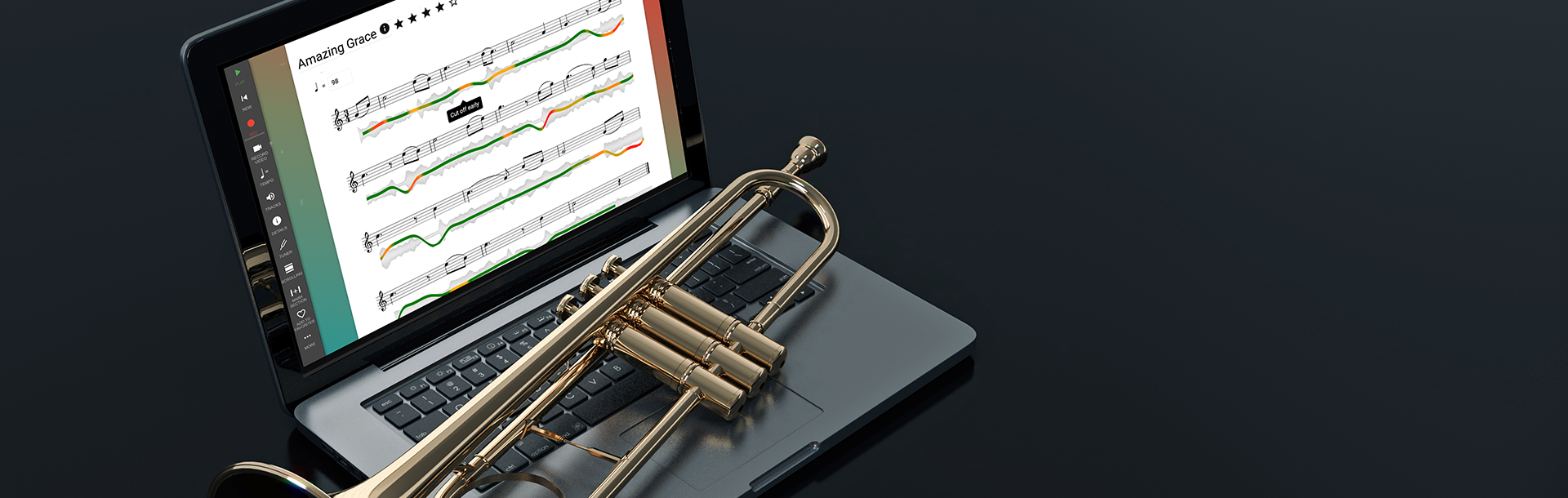
When I was teaching instrumental music in public schools, I regularly told my students to go home and practice. I'm sure every band, orchestra, and choir director reading this has done the same thing. We'd assign a passage, tell students to work on it, and hope that something resembling improvement would happen before the next rehearsal. But here's a question I wish I'd asked more often: Did my students actually know how to practice? Or even more to the point - did they actually practice at all? There's a big difference between spending 20 minutes with an instrument and spending 20 minutes getting better at playing it. I've known students who could play the same passage incorrectly 15 times in a row and then proudly announce that they'd practiced for half an hour. They weren't lying. They just hadn't accomplished very much. This is where some interesting educational research comes into play.
In November 2025, the Education Endowment Foundation published an updated report on metacognition and self-regulated learning. Those are fancy educational terms for something pretty simple: teaching students to plan their learning, monitor their progress, and evaluate their results. Research suggests that these approaches can be particularly effective in helping students become more independent learners. Sound familiar? It should. That's exactly what good musicians do when they practice. Think about a student learning a difficult trumpet passage. Rather than playing the entire piece repeatedly, a thoughtful student identifies the problem, isolates a few measures, slows the tempo, experiments with different approaches, and evaluates whether things are improving. That's not just practicing. That's learning how to learn.
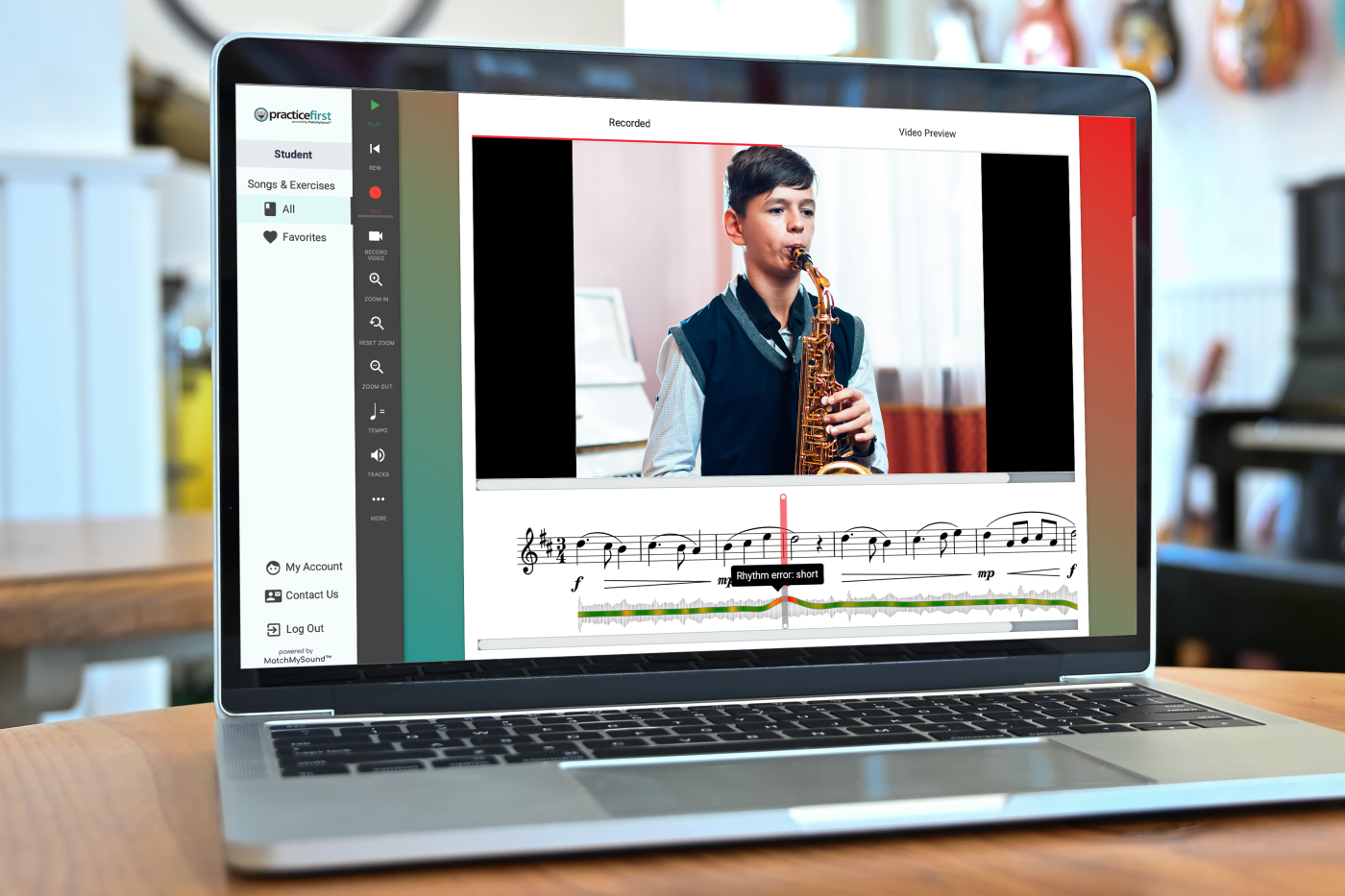
Music technology can make this process much easier to teach. One example is PracticeFirst, the performance assessment software available through MusicFirst. PracticeFirst powered by MatchMySound, listens as students play or sing and provides immediate feedback on pitch, rhythm, intonation, and duration. Instead of simply telling students they played something incorrectly, it helps them identify exactly where the problems occurred. What makes this particularly useful is the level of detail. Students can see a visual representation of their performance alongside the notation, with specific feedback about their accuracy. They can also adjust the tempo, repeat difficult passages, and try again. The assessment difficulty can be adjusted from easy to hard, making the software useful for beginning musicians as well as more experienced students.
Another important feature is the ability to record audio and video. Students can listen to or watch their performances and compare them with earlier attempts. Teachers can review those recordings alongside the automated feedback, which is especially helpful when evaluating musical expression, tone quality, and technique.
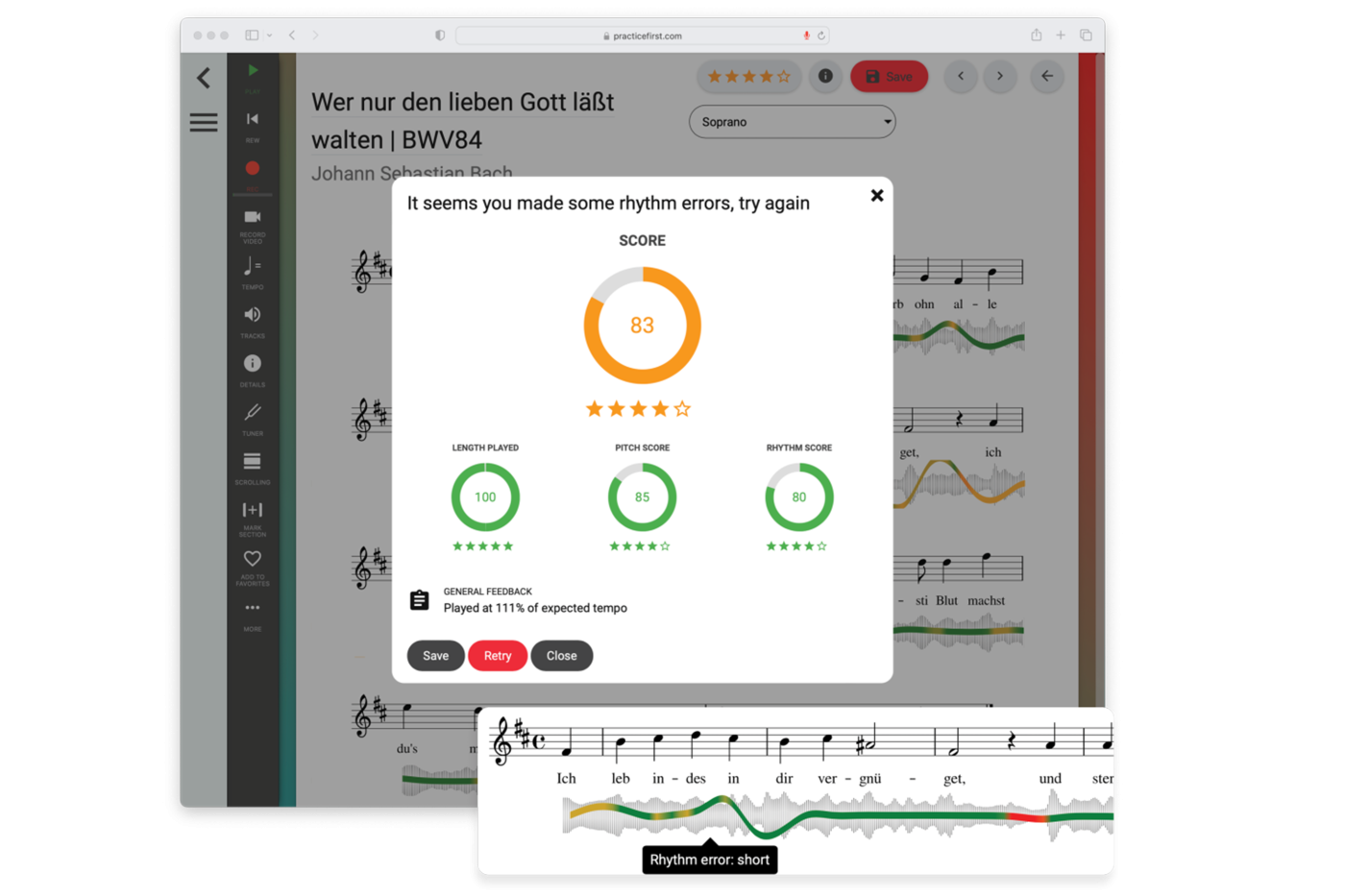
I also like that PracticeFirst powered by MatchMySound, includes thousands of exercises and pieces from popular method books (with MANY more coming soon), along with the ability for teachers to upload their own music. Students can even click on individual notes to see fingerings and hear how they should sound. That's particularly helpful when they're practicing at home without a teacher sitting next to them. Here's an idea to try with your students. Assign students a short passage in PracticeFirst and ask them to record an initial performance. Have them identify one specific area that needs improvement, develop a strategy to address it, and practice over several days. At the end of the week, they record themselves again and compare the results. The goal isn't simply to improve their PracticeFirst score. It's to help them understand what they did differently and why they improved.
Of course, technology can't replace a good music teacher, and automated feedback doesn't tell us everything about a musical performance. But it can provide students with something that has traditionally been difficult to deliver outside the classroom: immediate, specific feedback that helps them practice more effectively. I think we sometimes become so focused on teaching musical skills that we forget to teach students how to develop those skills independently. If we want students to become lifelong musicians, that's something worth changing. After all, the goal isn't to produce students who can practice successfully only when a teacher is standing in front of them. It's to produce musicians who know how to get better on their own.