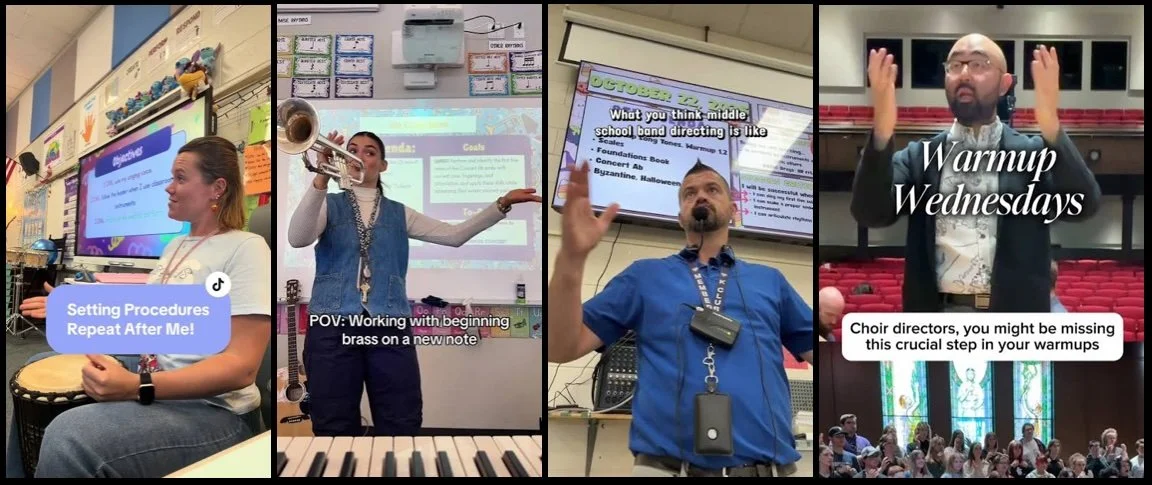
This past Friday, I spoke at the Connect 4 Education luncheon at the College Music Society Conference in Grand Rapids, Michigan. My presentation started with a question: What will we teach when technology can do almost everything? It sounds dramatic, especially over lunch. But with AI generating songs, providing performance feedback, and helping teachers create instructional materials, it is a question worth considering. Spend a few minutes watching music teachers on TikTok and you will find welcoming spaces, interactive teaching, creative students, and technology woven into instruction. You will also find high expectations for performance. Using technology and maintaining musical standards are perfectly compatible.
Predicting the classroom of 2030 is harder. We hear about personalized learning, devices for every student, disappearing textbooks, and AI everywhere. But who gets to decide which predictions become reality? Teachers? Students? Administrators? Technology companies? Music educators need to participate in that conversation, especially given the challenges they already face. Access to music education, shrinking budgets, assessment demands, and excessive workloads all affect what happens in classrooms. A shiny new tool is only useful if it helps address a real need.
One promising application is what I call “administrivia.” Drafting communications, organizing materials, and preparing routine documents consume time that teachers could spend teaching. If technology can reduce that burden, wonderful. Nobody became a music educator because they dreamed of writing their seventh reminder about concert attire. Personalized learning offers another opportunity. Practice tools can provide feedback between lessons, and I expect them to become better at identifying what individual students should work on and adjusting activities as they improve. The value is in helping students practice with purpose and giving teachers better information.
I also discussed “vibe coding,” which allows teachers to describe an activity or application they want and use AI to help build it. Imagine creating a small instructional tool around a specific problem your students are having. Teachers have always invented resources. These tools could expand what we can make. Recording and production deserve attention, too. Students increasingly encounter music through creating, recording, editing, and sharing it. These activities belong in our conversations about musicianship, alongside performing, composing, and listening.
Generative AI raises a bigger question. Music has absorbed technological change before. Recording, synthesizers, MIDI, and other developments changed how musicians work. This time, however, technology can make creative decisions for us. One of my central points was that creativity is not a file format. It is a chain of decisions. Producing an audio file does not, by itself, tell us much about someone’s musical understanding. Choosing what to keep, what to change, and why gives us something more meaningful to discuss. That should influence assessment. Alongside asking students what they made, we should ask what they decided and why. When AI is involved, asking how and why they used it can reveal more than simply trying to determine whether it was present.
So what will the music classroom of 2030 look like? Physically, probably quite familiar. The bigger changes may happen behind the scenes, through tools that reduce administrative work and support more responsive teaching. And what will we teach when technology can do almost everything? The good stuff. Listening carefully. Making musical judgments. Working with other people. Expressing something worth sharing. Understanding why one musical choice works better than another. Those are substantial things to teach. If technology gives us more time to teach them, that is a future I can get behind.
So what do you think?