More Than Gadgets: Music Education’s Perception of Technology Over Time
One of the things that generative AI does really well is finding trends or themes when given vast amounts of data. In fields like medicine, finance, manufacturing, logistics, and even retail, companies are using AI to make predictions: about diagnoses, potential fraud, efficiencies, and demand. The more data you feed these algorithms, the clearer the outcomes of the analysis you are looking for. I decided that I would use this concept to review every Music Educators Journal article over the last 90+ years to see how technology has been perceived by our profession over time. For more than a century, NAfME has used the Music Educators Journal as a forum for discussion and debate about what belongs in the music curriculum, and what doesn’t. If you trace the conversation about technology through the pages of MEJ, you see a profession that has moved from cautious curiosity to practical integration to critical reflection. While the tools have changed dramatically since they started publishing MEJ back in the 1910’s, the underlying questions have not. Here is the exact prompt that I used for this query:
Can you please do an analysis of every article ever written in the Music Educators Journal (archive here: https://journals.sagepub.com/loi/mej) and summarize the acceptance of technology across the music curriculum, how it is generally used, and any trends you can find.
What follows is a redux of the outline that it created, complete with some commentary. I hope that you find it as interesting as I do.
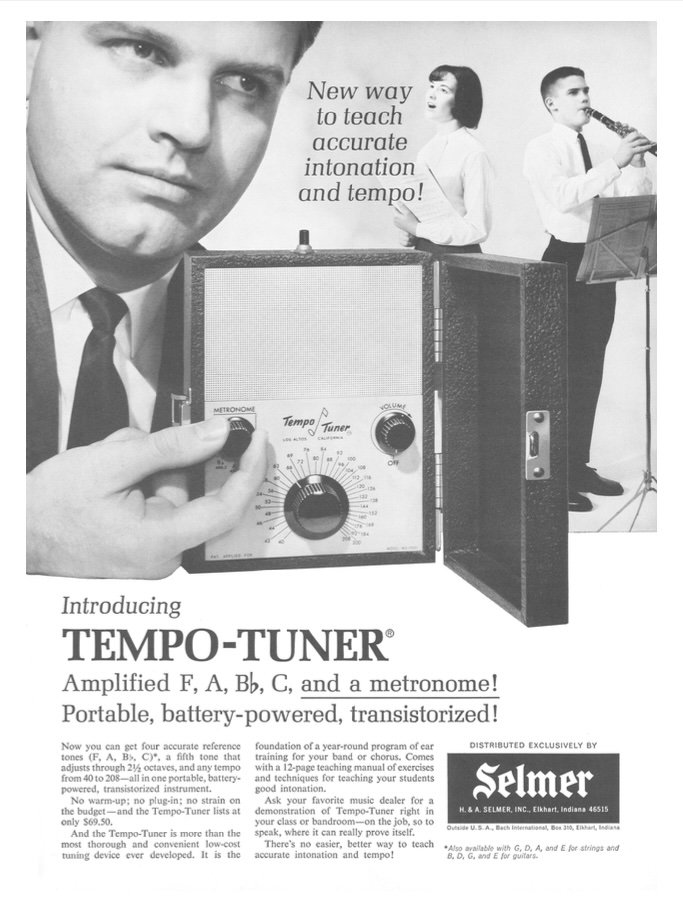
In the 1960’s, technology first appeared in MEJ largely as a support for existing practice. The very first mention of ANY type of technology that I could find was in the September 1, 1965 edition. It is for a product made by Selmer named the Tempo Tuner. Articles on tape recorders focused on their usefulness for capturing rehearsals, documenting concerts, and improving listening skills. The technology was framed as an aid to teachers who wanted students to hear themselves more clearly. It was not presented as a redefinition of musicianship. It was a tool that improved efficiency and feedback. The profession’s acceptance was generally positive, but the role of technology was clearly secondary to performance. In many ways, this is exactly how many teachers still view technology in a music classroom. It’s exactly how I used it with my performance ensembles. Handheld recorders, tuners, metronomes, audio playback devices were simply tools on my band director tool belt.
By the 1980s, audiovisual media expanded that supporting role. Slide projectors, filmstrips, and videotape were described as ways to deliver content more effectively and to enrich music appreciation. The emphasis remained on presentation. Technology was a delivery system. It helped teachers show scores, demonstrate techniques, and package instruction. There was little suggestion that it would fundamentally alter what counted as music learning. When I think back to my own music education (I was in high school from 1984-1988), this rings true - although my band director never turned any electronic device on at any point in my band career. That said, many of my other subject area classes used technology in this exact same way.
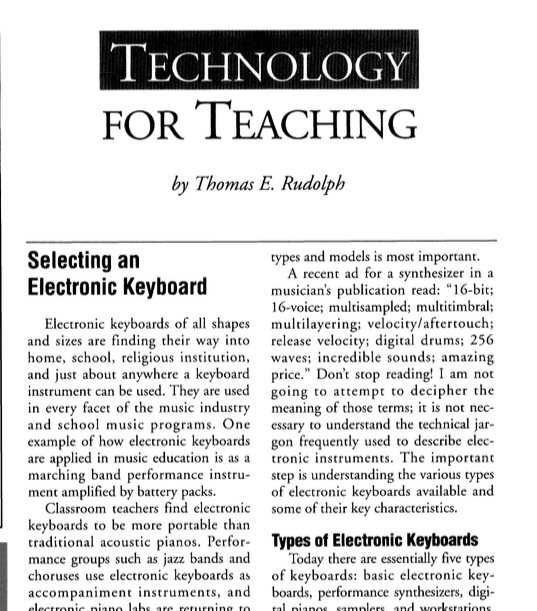
The 1990s introduced more complex, technology enriched teaching environments. As computers and MIDI systems entered schools, MEJ began publishing articles that acknowledged both excitement and anxiety. Some authors openly described teachers’ intimidation when confronted with unfamiliar hardware and software. At the same time, other pieces argued that even a general school computer lab could become a music classroom. Tom Rudolph, my music tech hero, was publishing articles regularly about how music tech could be used in the music classroom. Sequencing, notation software, and MIDI accompaniments opened doors to composition and arranging in ways that had not been widely accessible before. Technology was no longer just supporting rehearsal. It was enabling new forms of creative work. In my own teaching and work outside of my public school teaching gig, keyboard and guitar labs were a very exciting new way of teaching. I purchased a SoundTree Keyboard Lab in my K-8 teaching position in 1994. I had Korg X5 MIDI keyboards and Macs - loaded with software like Claire, PrintMusic, Music Ace, Band In A Box, and Microsoft Musical Instruments.
By the early 2000s, the question shifted from whether to use technology to how much it might transform the field. MEJ published articles asking directly whether technology would change music education in fundamental ways. Historical reflections placed current debates in context, suggesting that every generation of educators had confronted new tools. The tone suggested that technology had moved from the margins to the center of strategic thinking. It was not just about gadgets. It was about curriculum design. This reminds me of my favorite ever quote about teaching music with technology by Barbara Freedman - Teach Music. The technology will follow. I feel like this was the time when we moved beyond IF we should use technology to help us teach, but HOW to use it to make our instruction more engaging. Professional organizations such as TI:ME trained thousands of music teachers how to do exactly this. I spent MANY summers at campuses around the country teaching TI:ME courses. Very fond memories.
The 2010s marked another turning point. With the rise of tablets and mobile devices, MEJ authors began describing technology not simply as a teaching aid but as an instrument. I vividly remember reading David A. Williams article titled: Another Perspective: The iPad Is a REAL Musical Instrument and thinking about how mobile devices would change the way students interacted with software. Classroom sets of tablets were used for ensemble work, composition projects, and creative exploration. The conversation focused less on hardware specifications and more on pedagogy. How could technology support student agency. How could it broaden participation. How could it connect school music with the musical lives students experienced outside the classroom. When I left the classroom for the corporate world at the end of 2007, I went back to my middle school within a month to start a Kaossilator Orkestra -using iPads and Kaossilators from Korg. While LOTS of fun, it was a difficult ensemble to manage in terms of both repertoire and performance practice - so I gave it up. Many others have done similar things - like my good friends Will Kuhn in Ohio and David Williams at USF - and have had much greater success than I had.
During this same period, digital audio workstations became increasingly prominent in MEJ articles. DAWs were presented as comprehensive creative environments that allowed students to compose, produce, and respond to music in ways aligned with contemporary practice. This represented a noticeable expansion of what the profession considered legitimate music learning. Performance ensembles remained central, but technology provided pathways for students who might not see themselves reflected in traditional band, choir, or orchestra models. In my opinion, no other piece of software had a greater impact on this area of music instruction than GarageBand. I’ll never forget the look on my students faces the first time I showed it to them - they were truly blown away by the potential of what they could create.
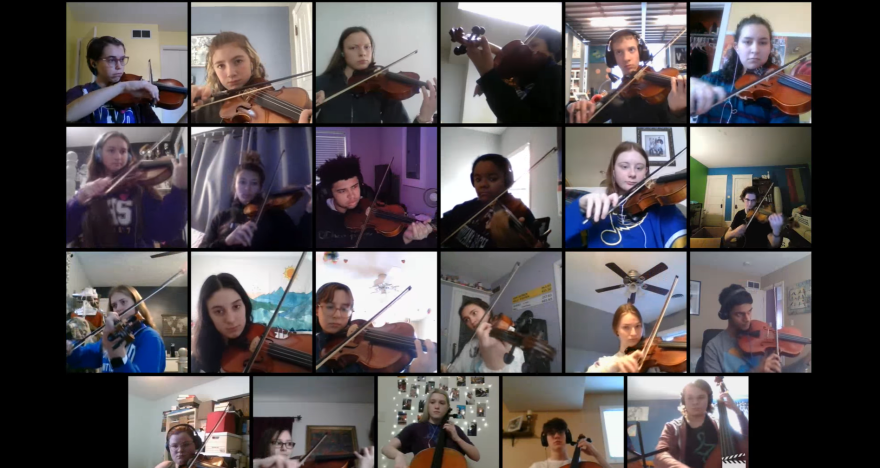
The COVID pandemic accelerated another shift in tone. When schools closed, technology became the primary means of instruction. MEJ related scholarship and commentary highlighted both innovation and inequity. Teachers found creative ways to use online platforms for composition, listening, and individual performance assessment. At the same time, access gaps in devices and reliable internet were impossible to ignore. Technology was no longer optional enrichment. It was a matter of educational continuity and equity. As someone who has spent his entire career trying to educate and excite teachers about the potential of using technology to help teach music, a global pandemic was not what I had in mind in terms of getting EVERYONE to use it. That said, almost every music teacher did, and I think there were both positive and negative repercussions with relying on it so heavily just to be able to teach. My sincere hope is that many saw the benefits and continue to use it with their students today.
In the past few years, artificial intelligence has entered the conversation. Recent MEJ articles explore practical classroom uses of tools such as ChatGPT while also raising concerns about authorship, assessment validity, and ethics. The tone is neither uncritical enthusiasm nor outright rejection. Instead, the profession appears to be asking more sophisticated questions. How should AI be used responsibly? What does it mean for student creativity? How do we assess work that may be partially generated by machines?
Across these decades of MEJ publications, several consistent patterns appear. Technology is regularly presented as a way to improve feedback, support creative work, and increase access to music learning. The challenges associated with technology change over time. In earlier periods, concerns focused on equipment costs and technical setup. More recently, attention has shifted to professional development, data privacy, copyright, and equitable access. The tools themselves have progressed from tape recorders to MIDI systems to tablets and artificial intelligence. Despite these changes, one underlying issue remains constant. Technology is expected to support musical understanding, not replace it. Exactly my thoughts.
A review of the Music Educators Journal shows that the profession has not simply adopted new tools without reflection. Authors have examined, debated, and gradually incorporated technology into broader definitions of musicianship. Over time, technology has moved from a supplemental role in rehearsal settings to a more central role in composition, production, and assessment. At the same time, discussions in MEJ make clear that technology decisions are connected to larger educational priorities. Questions about purpose, authenticity, and student access remain central to the conversation. The data suggests that technology will continue to be integrated carefully and in ways that align with evolving views of what music education should include - and I’m good with that.
What do you think?