Resource: Cello Drones
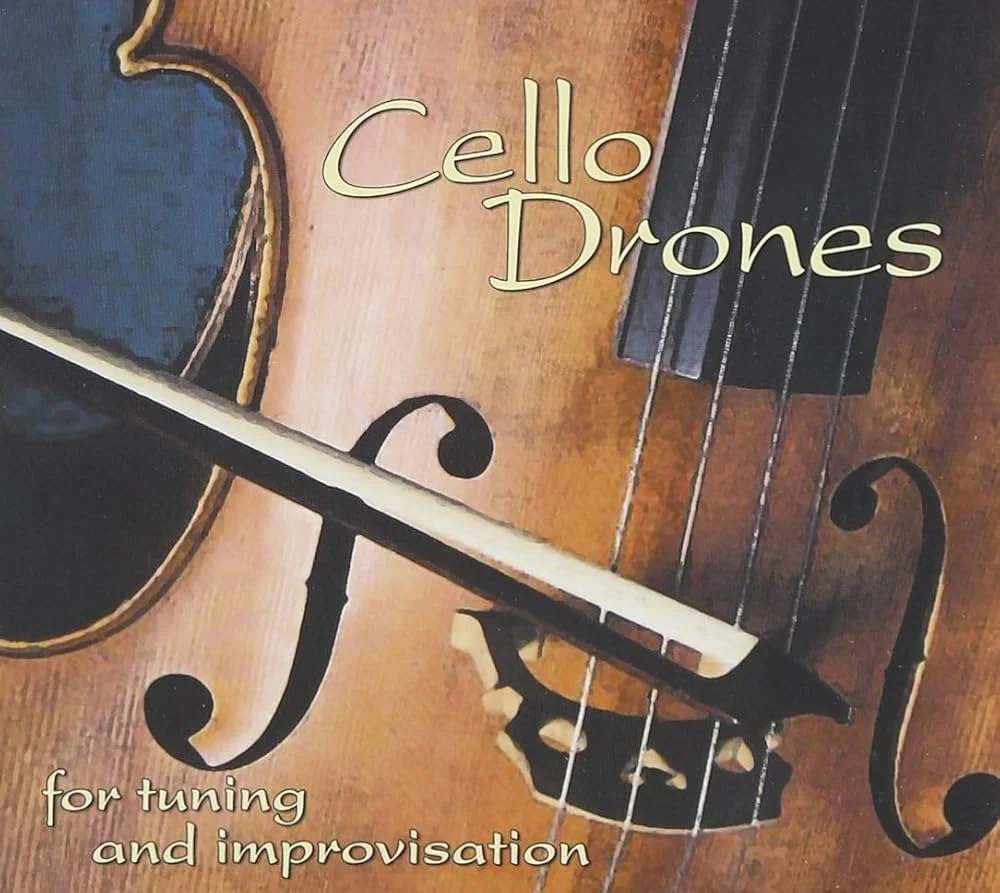
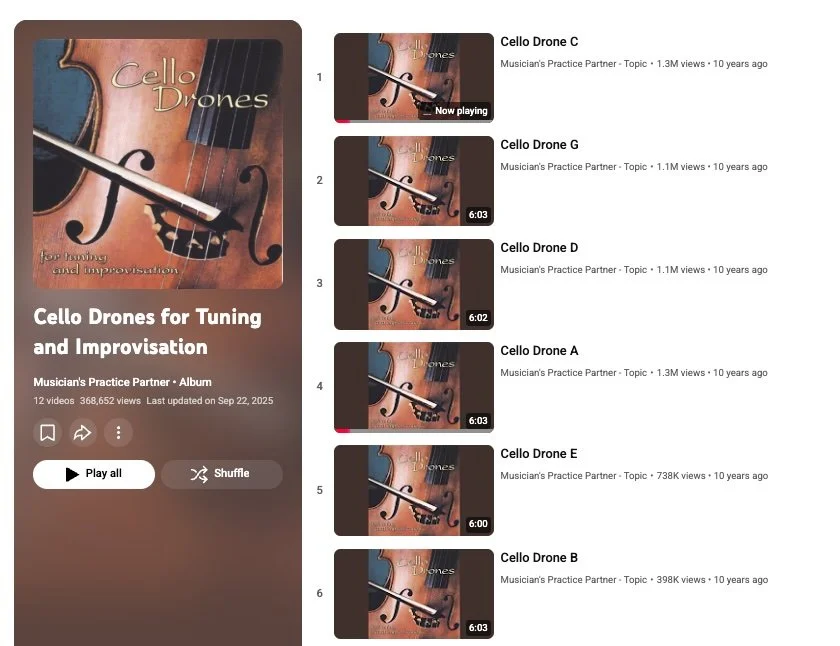
Sometimes the best tools for music educators really are the simplest ones. Last night, while interviewing Jamin Hoffman, a brilliant music educator from Wisconsin, we were talking about the ways he uses technology with his high school string students. While Jamin uses of many of the tools available in the MusicFirst Performance Bundle, what really stopped me in my tracks was a resource he mentioned almost in passing: Cello Drones. If you’re not already familiar with it, Cello Drones is about as stripped-down as a teaching tool can get. It’s a free YouTube resource consisting of a cello sustaining a single pitch for six minutes. No visuals. No interactivity. No flashy interface. Just a beautifully centered drone played by a cello. Jamin uses these videos to help his students tune themselves while listening to the drone, and the more I thought about it, the more I realized how powerful this approach is—not just for string players, but for developing musicianship across the board. Teaching students how to tune to a drone is one of those skills that pays dividends far beyond the tuning process itself. And the best part? All you need is a way to hook up the audio from your computer (or phone) to room speakers so that your students can hear it - no need to project the video at all. There’s even an album on Spotify that your students can use when they’re practicing!
As a tuba player who once found himself teaching middle school strings, intonation was easily the most challenging part of my job. With band students, I could rely on fairly straightforward language: “push in” or “pull out.” Brass instruments give you a visible, mechanical relationship to pitch adjustment. Strings, on the other hand, are a different beast entirely. Between friction tuning pegs, fine tuners, and finger placement on a fretless fingerboard, there are far more variables at play—and far fewer visual cues. What made it even harder for me was that many of my students were tuning by habit rather than by ear. They would turn pegs or fine tuners almost randomly, hoping to stumble into the right pitch, often without truly listening to what was happening. The result was frustration, wasted rehearsal time, and students who felt tuning was something done to them rather than a skill they owned. And while tough to admit, I often found myself taking the instruments from the students and tuning them myself. I know. I know.
When students tune to a drone, they are forced to engage their ears in a more meaningful way. A drone provides a constant pitch reference, allowing students to hear beats, waves, and interference patterns as they approach or move away from the center of the pitch. Instead of asking, “Is my tuner green?” students begin asking, “Does this sound settled?” That shift—from visual confirmation to auditory awareness—is critical. Even more importantly, tuning to a drone teaches students to listen relationally. In a real world music classroom, students don’t play in isolation. They play in ensembles, where intonation is about how pitches relate to one another, not how closely they match a digital readout. A drone simulates that reality in a controlled, focused way. Students learn what it feels like to lock in with another sound, to adjust pitch intentionally, and to recognize when intonation is truly aligned.
This is why I immediately connected Jamin’s use of Cello Drones with my earlier experiences using the tuning exercises in Auralia. Those exercises were invaluable in teaching students how to identify whether a pitch was sharp or flat, and they did a fantastic job of building pitch discrimination skills. What the drone adds is context. It bridges the gap between ear training and real-world performance. There’s also something wonderfully empowering about the simplicity of a drone. Because there’s no interface to navigate and no instructions to decode, students can focus entirely on listening. They can experiment. They can make adjustments, overshoot, come back, and internalize what those changes sound like.
Perhaps most importantly, teaching students to tune to a drone reinforces the idea that intonation is an active, ongoing process. It’s not something you “fix” at the beginning of rehearsal and forget about. It’s something you constantly refine as you play, listen, and respond to the ensemble around you. That mindset is foundational for developing mature, independent musicians. Cello Drones is a great reminder that while sophisticated technology can open incredible doors, sometimes the most impactful tools are the ones that do one thing exceptionally well. A single sustained pitch, used thoughtfully, can teach listening skills, ensemble awareness, pitch control, and musical responsibility—all in six quiet, focused minutes.