What Music Teachers Wish Policymakers Actually Understood
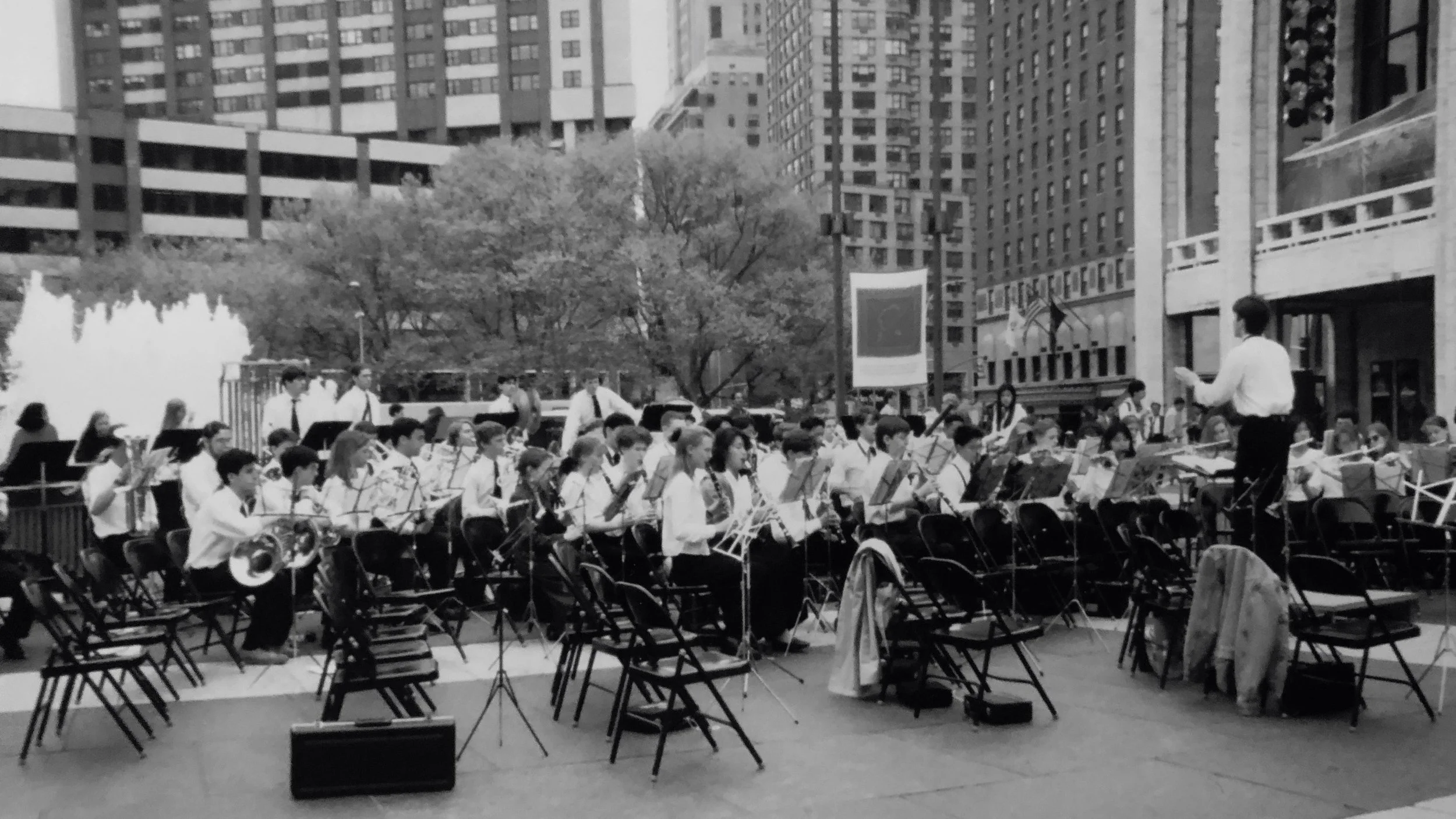
Conducting the Ridgewood High School Concert Band @ Lincoln Center - 1993
If you want to understand the health of a music program at any school, don’t start with the concert. Start with the rehearsal schedule. Time is the foundation of everything in music education. Rehearsal time is not a convenience; it is the primary instructional resource. Musical literacy, ensemble cohesion, individual growth, and performance readiness all depend on consistent, uninterrupted learning experiences. Yet music classes are frequently the first to lose minutes to testing schedules, assemblies, rotating block calendars, and other disruptions that appear reasonable in isolation but are devastating in accumulation. It used to happen to me all the time when I taught in the New Jersey Public Schools. No other programs - at least at my school - had the same thing happen to them. God forbid if a student missed phys ed! Music learning is cumulative and physical. Skills develop through repetition, listening, reflection, and shared experience. When administrators mess with our schedules it undermines that process in ways that are not immediately visible but are deeply consequential. But it’s “only music”, right?
Performance expectations greatly add to this challenge. Concerts, festivals, community events, recruitment performances, and district showcases are often used as public indicators of program success. Each of these events represents weeks or months of preparation layered on top of an already full instructional load. Music teachers are not simply preparing students to perform. They are managing logistics, coordinating schedules, communicating with families, maintaining equipment, and ensuring student safety, frequently outside of contracted hours. When expectations increase without corresponding support, the result is not higher quality outcomes but teacher exhaustion and burnout. I always thought it would be great to have the math teachers have to put on a demonstration of all of their students performing difficult math equations in front of a live audience.
Staffing realities also have a massive impact on any music program. Music educators often teach large ensemble classes with student numbers that would be considered unmanageable in most academic settings. A single teacher may be responsible for well over a hundred students each day, all progressing at different rates and all requiring individualized feedback. The ongoing substitute shortage magnifies this issue, particularly in music where specialized knowledge is essential. I almost ALWAYS went to school sick instead of writing sub plans as I knew that when I returned, my room would be a mess. Programs often continue to function only because teachers absorb the strain personally, an approach that is neither sustainable nor fair. I can’t think of any other program in a school that has the same issues.
This is where music technology deserves careful consideration as part of the solution. Not as a replacement for teachers and not as a shortcut to learning, but as a support that helps educators extend their reach and use time more effectively. Thoughtfully implemented technology can allow learning to continue beyond limited rehearsal periods, provide students with structured opportunities for practice and reflection, and give teachers clearer insight into individual progress. Used well, technology helps reclaim instructional time rather than compete with it. Technology also plays an important role in equity. Students arrive with different levels of access to private lessons, practice environments, and outside support. Digital tools can help provide consistent access as well as feedback for all students, regardless of background. For administrators and school boards concerned with access, retention, and student outcomes, this is an important consideration. Equity in music education is not achieved through access alone; it requires systems that support every learner consistently.
Long term program health is perhaps the most misunderstood issue of all. Strong music programs are built gradually through careful sequencing, continuity, and trust. Healthy high school ensembles depend on strong middle school programs, which depend on consistent and high quality elementary instruction. When a position is cut or left unfilled, even temporarily, the impact is felt for years. Just look at the lasting impact that Covid 19 has had. Recruitment declines, retention drops, and culture erodes. Rebuilding is far more difficult than sustaining what already exists. Technology cannot solve staffing shortages, but it can help preserve continuity during transitions, support new educators, and reduce the fragility of programs under stress.
What music teachers want policymakers to understand is that sustainability requires informed investment, not just public appreciation. Protecting instructional time, setting realistic performance expectations, supporting appropriate staffing, and embracing responsible use of technology are not luxuries. They are necessities for healthy programs. Music educators are not asking for special treatment. They are asking for decisions grounded in the realities of how music is taught, learned, and sustained. When those realities are respected, the results extend far beyond a single concert. They show up in healthier teachers, more engaged students, and music programs that remain vibrant for generations. I’ve always said to those who have asked me what it was like to leave teaching for the corporate world, and if there were any specific reason that I did so I always say the following: If they would have just let me teach music, and left out all of the administrivia, I woudl still be teaching.
Despite all of these challenges, there is reason for optimism. I get to meet a LOT of music teachers in my role at MusicFirst, and from my perspective, music educators continue to adapt, collaborate, and advocate with extraordinary resilience. Even with all of the hurdles thrown in their way, they manage to bring out the very best in their students. In my opinion. the next step is not to do more alone, but to invite administrators and school boards into our classrooms mor often so that we can develop a sense of trust, transparency, and shared goals for students. My classroom was always the first stop on school tours for prospective new students. Why? Because they knew I cared and that my students would be engaged in learning, no matter when they stopped by. There needs to be a quid pro quo in that situation - I just never did it. By opening honest conversations about instructional time, staffing realities, long term program health, and the thoughtful use of technology, music teachers can help shape decisions before they become problems. When educators and administrators work together with a clear understanding of how music learning actually happens, the result is not just stronger programs, but healthier communities, more engaged students, and a sustainable future for music education. Onwards!