Are Chromebooks in Schools Going Away?
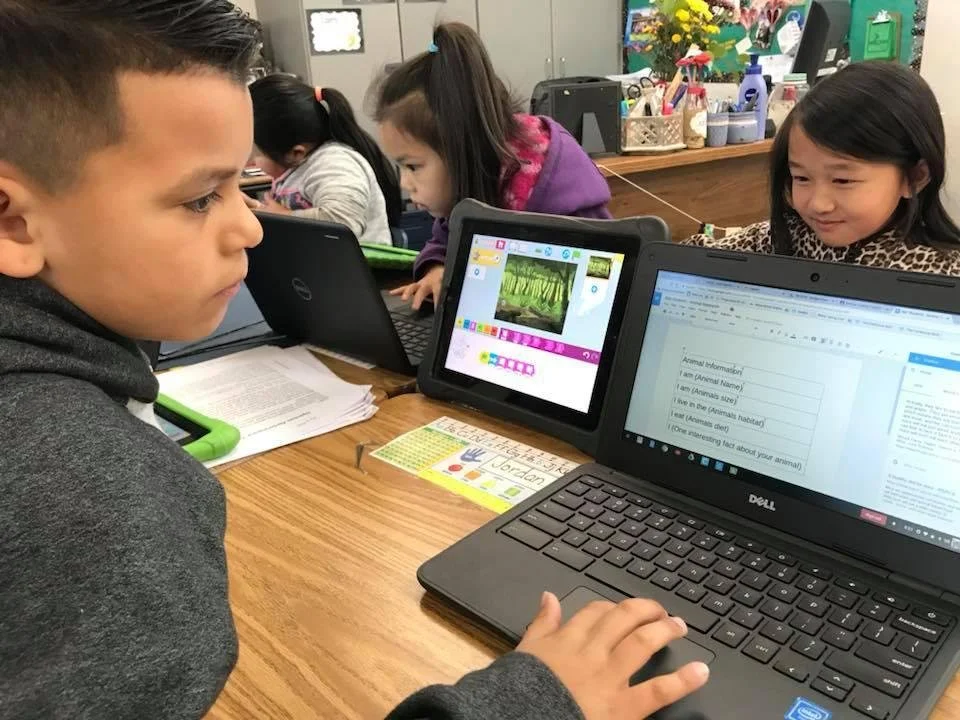
I recently read an article in the The New York Times article on “Chromebook remorse,” and it reinforces something that I’ve been saying for years. The article - titled “Chromebook Remorse: Tech Backlash at Schools Extends Beyond Phones” written by Natasha Singer, illustrates that while schools are not abandoning technology, they are starting to rethink how often and in what ways it is used. Instead of devices being open and available all the time, many classrooms are shifting toward a more deliberate approach in which technology is used only when it directly supports the learning goal. In my opinion, the title of the article is a bit sensationalist - it certainly got me to read it. Rather than suggesting that educational technology is schools is slowly going extinct, it is really saying that it needs to be used intentionally and not just for the sake of using it.
When technology is used with purpose, it tends to be more effective, and students are more likely to engage with it in meaningful ways. In music education, where focus, listening, and real-time interaction are so central, that kind of balance can make a noticeable difference in how rehearsals feel and how students learn. It’s all about intentional use rather than using it just because it’s available.
For music educators, this shift should seem obvious and is more of a useful reminder than a Doomsday for Chromebooks. Ensemble classrooms have always depended on attention, listening, and performing. While technology has added meaningful tools to our work, it has also introduced moments where devices compete with those core elements rather than support them. I’ve always told people that I almost never used technology during my ensemble rehearsals. While the technology was very different when I left teaching in 2007, the main reason that I didn’t use it was that there wasn’t enough time, and students didn’t have access outside of the classroom. The idea of having students open up Chromebooks during the middle of a rehearsal still seems kind of silly to me. Sorry not sorry.
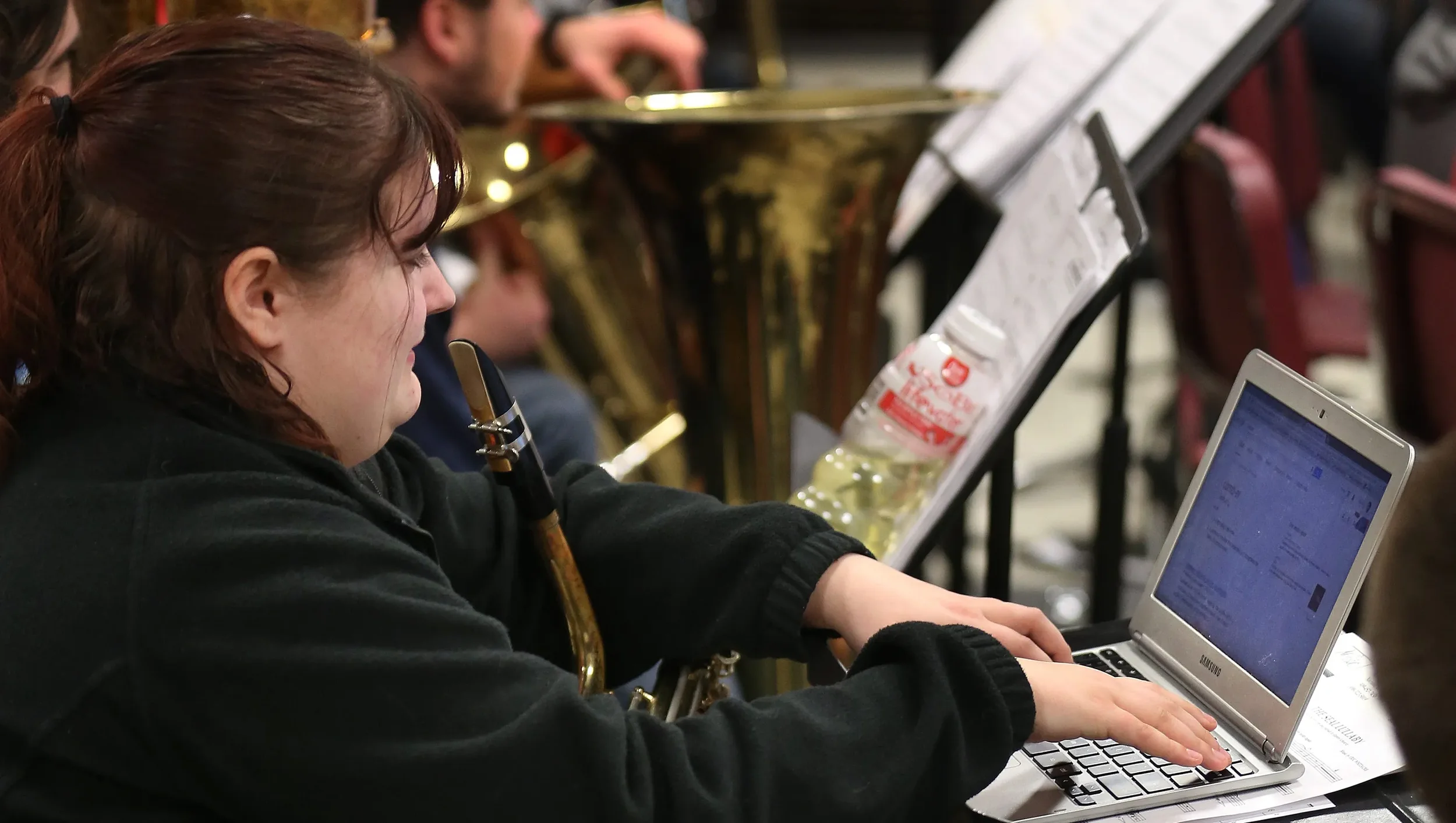
The schools highlighted in the NY Times article are not removing technology altogether. They are simply using it more selectively, and I LOVE this approach. Devices are available when needed, but they are not constantly in the students hands. That idea translates perfectly to music classrooms, where the most effective use of technology, in my opinion, happens outside of full ensemble playing or in clearly defined moments within a rehearsal. When students record themselves and and get immediate feedback, they get an idea of how they’re doing. Tools like PracticeFirst powered by MatchMySound make that process easy to implement and repeat, which helps students build the habit of evaluating their own work.
Where challenges tend to happen is when devices are present without a clear purpose. In a full ensemble setting, the priority should be listening across the group, watching the conductor, and responding in real time. If every student has a device open during that process, even for good reasons, it often reduces the level of shared focus that makes ensemble playing effective. This is not a criticism of technology itself, but a recognition that some parts of music learning are better supported without it.
For me, the main takeaway from the article is not that schools used too much technology, but that many may have used it without considering its impact on attention and learning. Music educators have always been in a strong position to avoid that pattern because the goals of ensemble performance are already well defined. Teachers should always treat technology as one of many tools available to support instruction. When it helps students listen more carefully, practice more effectively, or understand their own performance, it is worth using. When it does not, it is equally appropriate to set it aside. In that sense, the conversation around “Chromebook remorse” is less about reducing technology and more about using it with purpose. For music classrooms, that is a practical and achievable goal.