Lesson Plan: Composing Music for the Winter Olympics
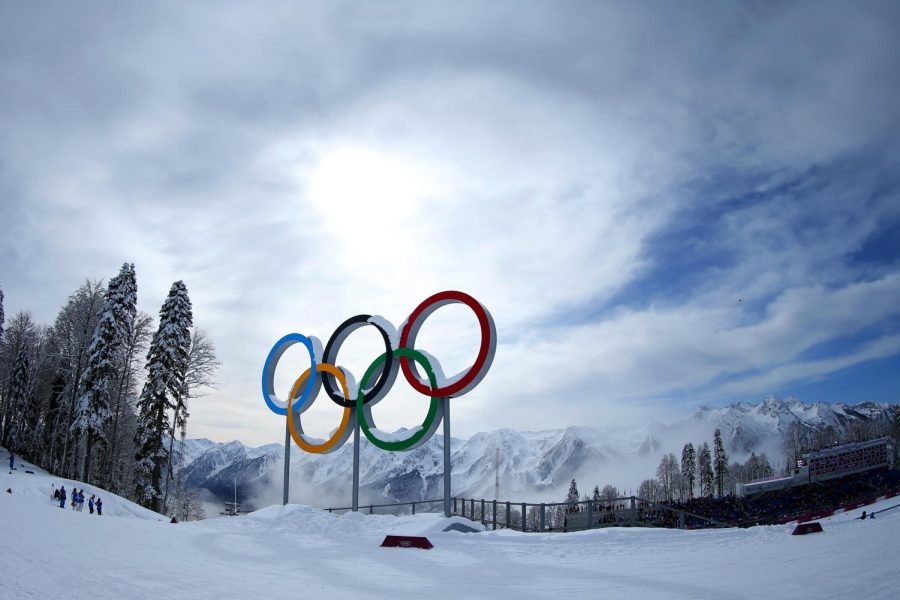
My wife Alison and I absolutely LOVE watching the Winter Olympics. We really look forward to it. Ice skating, skiiing, bobsled, luge, speed skating, the winter biathlon, and of course the MUSIC - we love it all. Now that the TV commericals are non-stop and the Opening Ceremony is only a few days away, I thought it would be fun to use an event like this as inspiration for a composition activity with students. What follows is a lesson plan that you can do with many of the software tools available from MusicFirst that has students choosing a specific aspect of the games and composing a relatively short piece of music using notation sofwtare or a DAW. I hope you can use this over the next few weeks with your students!
Composing Music for the Winter Olympics
Grade Levels: Middle school and high school
Time Frame: Three to five class periods of 45 to 60 minutes
Materials:
Notation software such as Flat for Education or Noteflight Learn
Headphones and MIDI keyboards if available
Learning Objectives;
Students will compose an original piece of music inspired by the Winter Olympics
Students will use musical elements intentionally to represent ideas, motion, or symbolism
Students will demonstrate basic proficiency with notation software or a DAW
Students will reflect on how musical choices communicate meaning
NCAS Alignment: CREATING
Anchor Standard 1 Generate musical ideas
Anchor Standard 2 Organize and develop musical ideas
Anchor Standard 3 Refine and complete artistic work
Lesson Overview:
Students will compose a short original work inspired by the Winter Olympics. They may choose to work in traditional notation software or in a DAW. The focus is on purposeful musical decision making rather than production polish. Students select one creative prompt and explain how their music connects to the theme.
Creative Composition Prompts
Students choose one prompt or propose an equivalent idea with teacher approval.
The Five Rings
Compose a piece based on the five Olympic rings.
Each ring might represent a musical element such as pitch set, rhythm type, instrument family, texture, or register.
The traditional ring colors can guide musical choices such as timbre, mode, articulation, or dynamics.
Students decide how the five ideas interact, overlap, or merge.
Choose a Winter Olympic Event
Select one specific event such as downhill skiing, speed skating, curling, bobsled, or ski jumping.
Write music that reflects motion, pacing, and energy of the event.
Students should consider tempo changes, rhythmic density, contour, and texture.
Ice Skating Remix
Create music intended for a figure skating routine.
Students may remix either existing music OR they can compose a short original theme(s) or build loops that evolve over time.
Focus on contrast between lyrical and athletic sections.
Optional challenge is to design clear musical cues for jumps or spins.
You can use this recent example so that students understand how music is used in figure skating:
Opening Ceremony Theme
Compose a short fanfare or theme that could open a Winter Olympic ceremony.
Emphasize strong melodic identity and clear structure.
Students may limit themselves to a specific scale or harmonic progression.
You can show your students this video of the Opening Ceremony at the WInter Olympics in Vancouver from 2010:
National Identity Without Lyrics
Represent a country participating in the Winter Olympics without using words.
Students research musical traits associated with that culture and apply one or two ideas thoughtfully.
The goal is suggestion, not imitation.
Composition Requirements
Length of 16 to 32 measures or 60 to 90 seconds
At least two contrasting sections
Clear beginning and ending
At least three intentional musical choices explained by the student
Export as a score, audio file, or both depending on tool used
Procedure
Day 1
Introduce the Winter Olympics theme and listen to short examples of programmatic music
Students choose notation or DAW and select a prompt
Planning sketch using a simple template or guided questions
Day 2
Compose initial material
Teacher circulates and asks students to justify musical choices
Day 3
Revise and refine
Add dynamics, articulation, automation, or texture changes
Day 4 Optional
Peer feedback using a short rubric
Final revisions and submission
Day 5 Optional
Listening session or informal sharing
Assessment Criteria
Connection between music and chosen Olympic theme
Intentional use of musical elements
Completion of required length and structure
Student reflection explaining decisions
Differentiation Ideas
Provide loop templates or starter measures for beginners
Allow advanced students to add form constraints or orchestration limits
Permit solo or partner work depending on class needs
Extensions
Create a class playlist representing different Olympic events
Have students vote on which piece best fits a specific event
Pair with a PE or social studies class for cross curricular connections