
Sometimes you find music resources on your own by searching for them or seeing a post from another music educator, and sometimes you learn about them from people sitting in the front row at one of your sessions at a conference. Meet Whack Em All - a fantastic YouTube channel that is filled with engaging play-a-long videos for Boomwhackers that a teacher at my modern band session told me about this past Saturday. She was telling me that she plays pop music with her elementary students using this channel. Whenever I hear about new resources directly from the mouths of teachers who actually use them, I get excited. I actually told her, and the audience, that I would be writing about it today. As music teachers, we spend a lot of time looking for relevant and engaging resources that will help music come alive for our students. But what captures students’ attention? What motivates them to engage? What makes music feel connected to their everyday lives rather than confined to the classroom? Increasingly, the answers to those questions live online, often in places we would not traditionally label as “music education.” This YouTube channel, Whack Em All, created by Kristoffer Widerberg with art by Thanya Widerberg, is one of those places.
When I first landed on this channel, it looked like “edutainment” to me. Short videos. Minecraft references. Boomwhackers. Remixes. Quick visual hooks designed for scrolling audiences. It would be easy to dismiss it as novelty content and move on. But doing so would miss an important point. This channel represents the way many students already experience music today: informal, participatory, playful, and deeply connected to the media they care about. Whack Em All blends simple pitched percussion instruments with gaming culture, especially Minecraft, to create short, engaging musical moments. One example features a boomwhacker play along built around a familiar Minecraft themed idea. The musical materials themselves are not complex. Boomwhackers are an ideal entry point for musical participation. They require little technical setup. Pitch is immediate. Rhythm is physical. For many students, especially those who do not see themselves as “musicians,” this kind of instrument lowers the barrier to entry. When those instruments are paired with visual references students already recognize, the invitation to participate becomes even stronger. What I LOVE about these videos, once I started going through them, is that they all start with a “You Will Need” slide that shows the exact Boomwhacker pitches you’ll need to play the video.
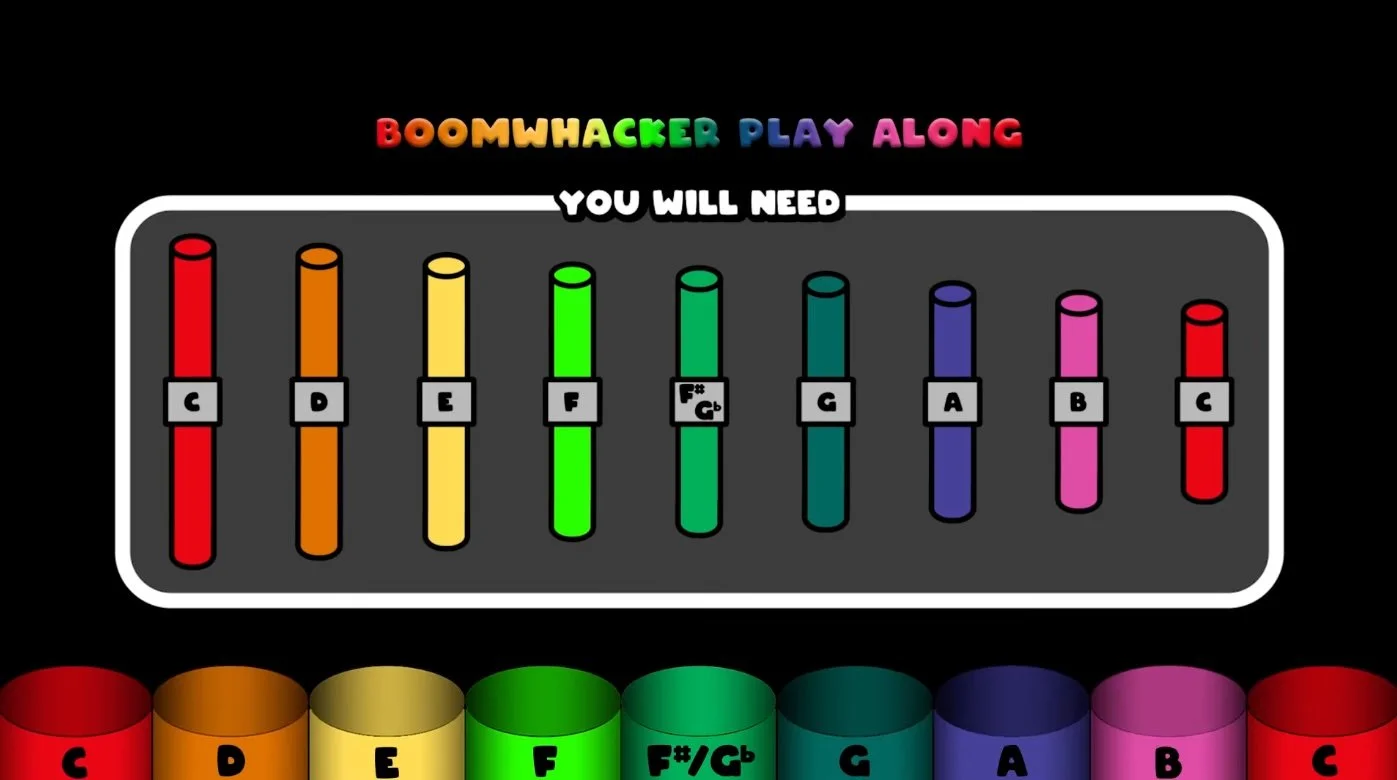
Once you press play on any of them, you’ll see a familiar interface if you’ve ever played music-focused video games like Guitar Hero or RockBand. The colored pitches fall from the top of the screen and land on the tops of the animated Boowhackers at the bottom. Here’s one of the easier tunes available - the theme song from Bluey:
You’ll notice that the backing tracks on all of these videos are really good. Even though it has been quite some time since I have stood in front of elementary school students, I am 100% sure that they will love not only playing along with songs that they already know, but they’ll love the way these songs sound. I don’t know about you, but including songs by the K Pop Demon Hunters was not on my bingo card for teaching music in an elementary school - but the students will likely want to play this one over and over and over again. :)
For teachers, this kind of content can be useful in several ways. It can serve as a conversation starter about rhythm, pitch, form, or pattern. It can be used as an example of how simple musical ideas can be transformed into something engaging. It can inspire students to create their own versions using classroom instruments, notation software, or digital audio workstations. It can also help validate students’ existing musical interests rather than asking them to leave those interests at the door when they enter music class. And hey - if you are interested in making similar videos for your students, you can check out this great how to video from my dear friend, Amy M. Burns:
For educators willing to look beyond traditional sources, channels like Whack Em All provide insight into how students experience music outside school and how we might bridge that gap inside school. The goal is not to copy this content directly, but to understand why it resonates and how those same principles of accessibility, familiarity, and play can inform our teaching. Music education does not lose value when it intersects with popular platforms - especially in the elementary school environment. The kids in our classrooms listen to popular music all the time, and believe it or not, they start listening to that music when they are young. I urge you to check out this amazing free resource and try out some of the songs with your students. I’m pretty sure they’ll LOVE it.