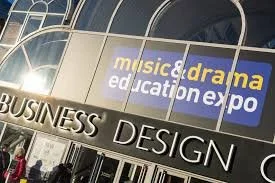
Music & Drama Education Expo 2026 Recap
Last week, I had the absolute pleasure of attending the annual Music & Drama Education Expo in London. This is a very special show for me, as it was at the very first one, back in 2013, that we officially launched MusicFirst as a brand. A LOT has happened since then, but this show remains a consistently great event to showcase the many different solutions that MusicFirst offers, and as the largest annual conference of its kind in England, I’ve been to this show many, many times since. Unlike most shows in the United States, this one is completely FREE to attendees. It runs on Thursday and Friday every year, and while I do tend to get approached by numerous startups as the show provides free access to everyone, I always enjoy the chance to catch up with all of the members of the UK team, as well as many of our partners. What made this particular show special was the fact that for the first time, MusicFirst exhibited alongside Charanga, our sister company in the UK. Our stand was buzzing throughout the entire event, and it was so good to see so many of our existing partners and customers.
Removing Barriers: Meet Digit Music
Yesterday at the Music & Drama Education Expo here in London, I was introduced to Simon Tew, who runs an amazing company here in the UK called Digit Music. When I went over to their booth, I immediately saw some incredible adaptive technologies for students that allow them to interact with music software. Making music accessible for ALL students has always been one of my passions. If you have spent any meaningful time in music education, you eventually discover that one of the most persistent misconceptions in our field is that students struggle because music itself is inherently difficult. In practice, the difficulty rarely begins with pitch, rhythm, tone production, or even motivation. It begins with access. Before we can teach understanding, students must first be able to participate, both physically and cognitively, in the act of making music. Digit Music addresses this head on. The first thing I saw at their booth was a familiar hardware device for students who might be wheelchair bound - the joystick. However this was no ordinary joystick. Named CMPSR, this joystick is actually a hardware device that can be plugged into any music software that interacts with USB MIDI controllers, and unlike many other adaptive musical instruments, it’s VERY affordable. Here’s a quick look:
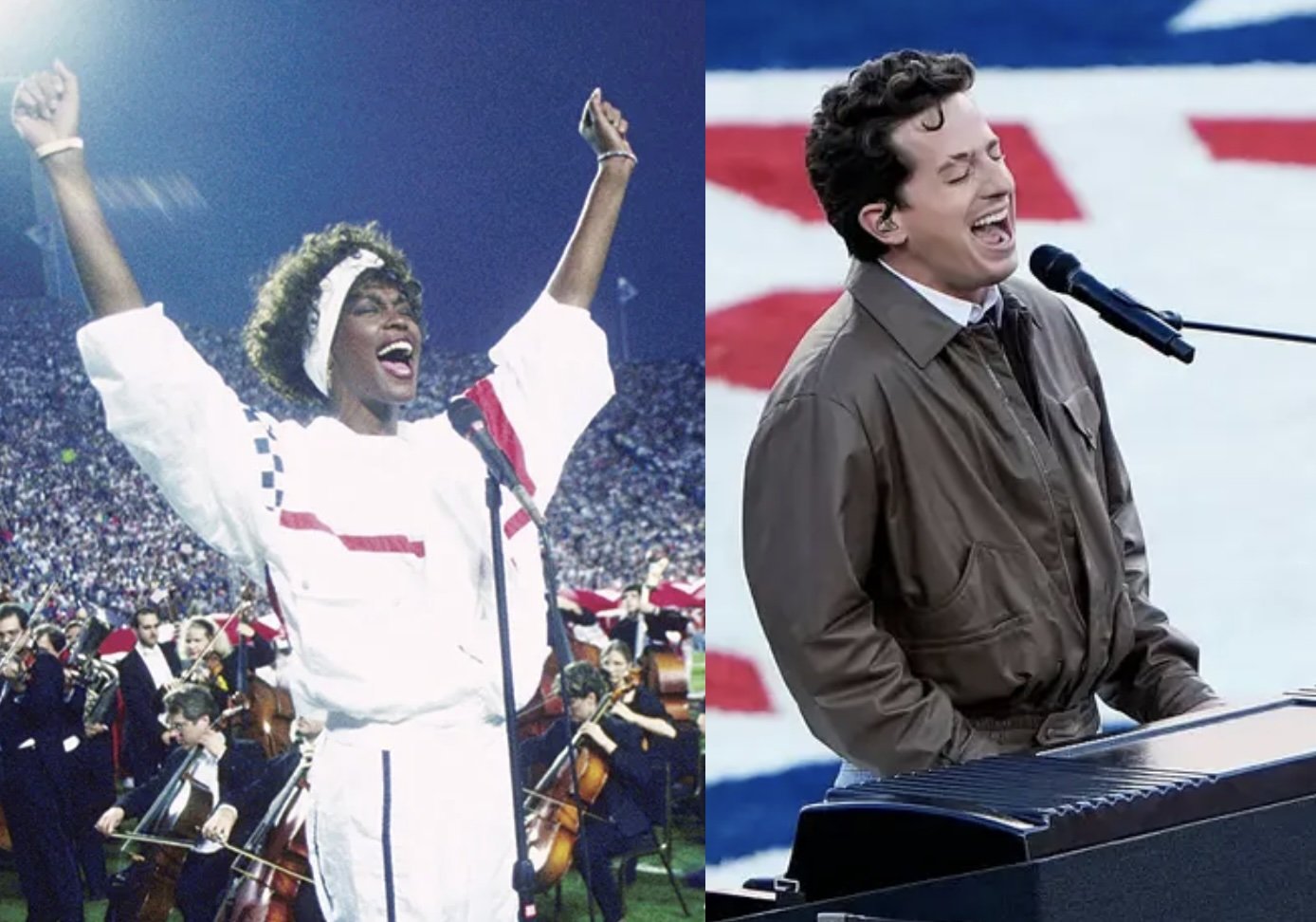
Whitney vs. Charlie - Compare & Contrast
If you were watching Super Bowl LX, you were probably just as blown away by Charlie Puth’s version of the Star Spangled Banner as I was. To me, it was simply incredible. I loved the harmonization, the arrangement, and the performance. For an anthem that is sung before every sporting event, it’s always special when you hear one that is truly original while honoring the purpose of an anthem. Charlie’s was the best I’ve heard in a LONG time - perhaps, dare I say, since Whitney Houston’s version back at Super Bowl XXV in 1991. When I found out that her performance was the inspiration, I wasn’t surprised at all. It also reminded me of an assignment that I created for the MusicFirst Classroom about comparing and contrasting two performances of our national anthem. I’ve updated that original assignment to include these two iconic performances. I hope that you can use it with your students. Let me know what you think!
AI Tool: Detect Music
Generative artificial intelligence (AI) is becoming part of everyday music creation - whether we like it or not. Students are experimenting with AI tools such as Udio and Suno for composition, and many music educators that I have spoken with about AI during my numerous sessions and keynote addresses surrounding this topic find these tools and this topic to be the most distressing. Is the future of music going to be filled with music created by AI? I certainly hope not. At the same time, streaming platforms, publishers, and educators are asking an important question: How do we know whether a piece of music was created by a human or generated by AI? There are now numerous examples of fake bands and musical arists all over Spotify. A new, free tool called DETECT.MUSIC, developed by MatchTune, aims to help answer that question. The service is designed to analyze music tracks and determine whether they are likely AI-generated, and in some cases identify which AI engine may have been used. For music educators, this tool is worth paying attention to, not because it solves every problem around AI, but because it helps clarify an increasingly blurry landscape.

Lesson Plan: Composing Music for the Winter Olympics
My wife Alison and I absolutely LOVE watching the Winter Olympics. We really look forward to it. Ice skating, skiiing, bobsled, luge, speed skating, the winter biathlon, and of course the MUSIC - we love it all. Now that the TV commericals are non-stop and the Opening Ceremony is only a few days away, I thought it would be fun to use an event like this as inspiration for a composition activity with students. What follows is a lesson plan that you can do with many of the software tools available from MusicFirst that has students choosing a specific aspect of the games and composing a relatively short piece of music using notation sofwtare or a DAW. I hope you can use this over the next few weeks with your students!
Lessons Learned: Technology in Music Education
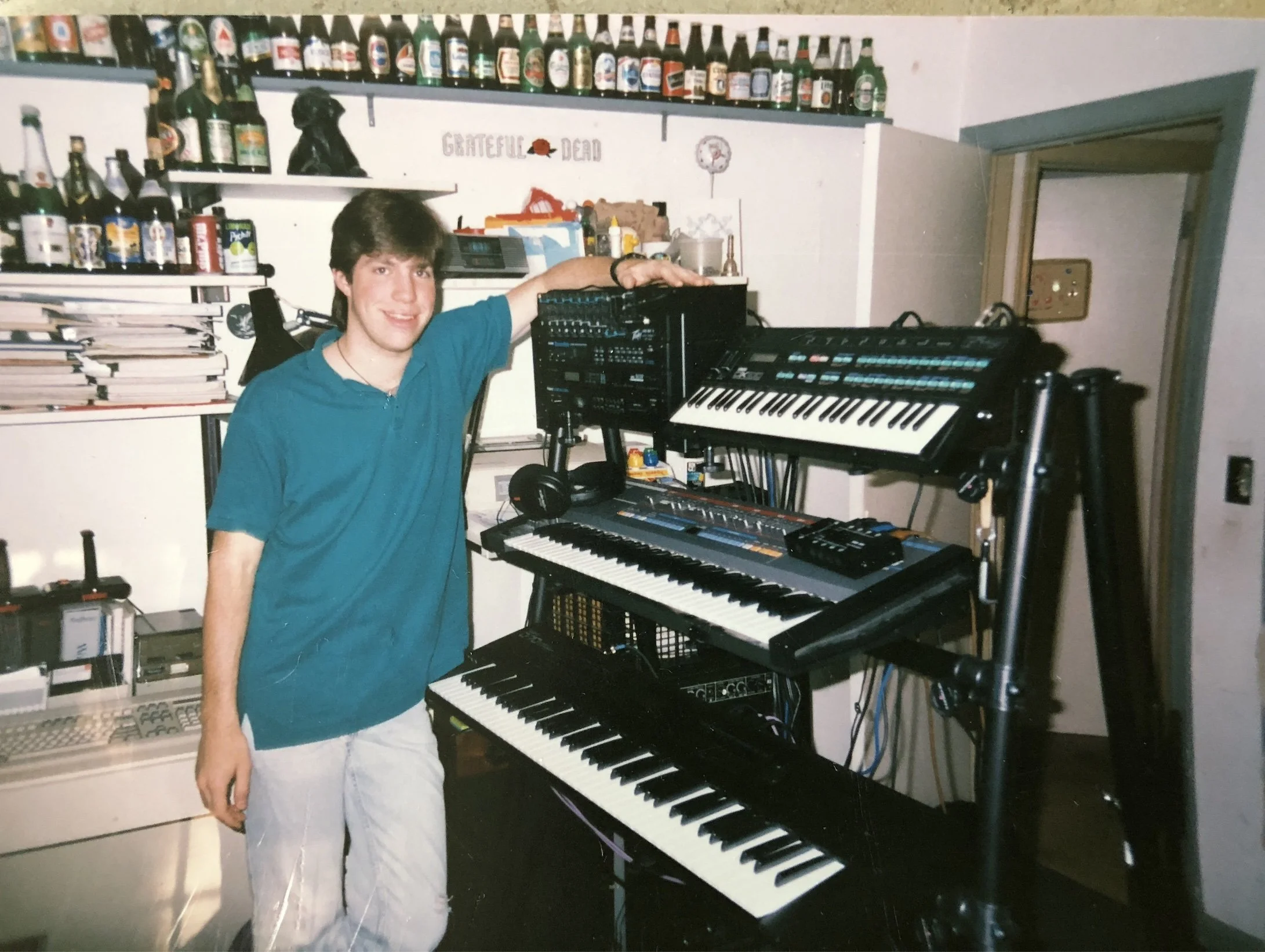
Today I’m out in Colorado Springs, CO at the 2026 CMEA Conference on behalf of MusicFirst. I always enjoy traveling around the world meeting teachers at events like this. Frequently, I also present a variety of sessions for MusicFirst while I’m at these events, and this one is no different. Sometimes when I check the conference program, I notice that I am scheduled to present a session that I’ve never done before. We have an amazing team that creates session titles and descriptions for us, and at this show there’s a session titled: What the Tech?! Lesson Learned From 35+ Years Implementing Music Technology. Here’s the session description.
New Beginner Band Course from Rising Software
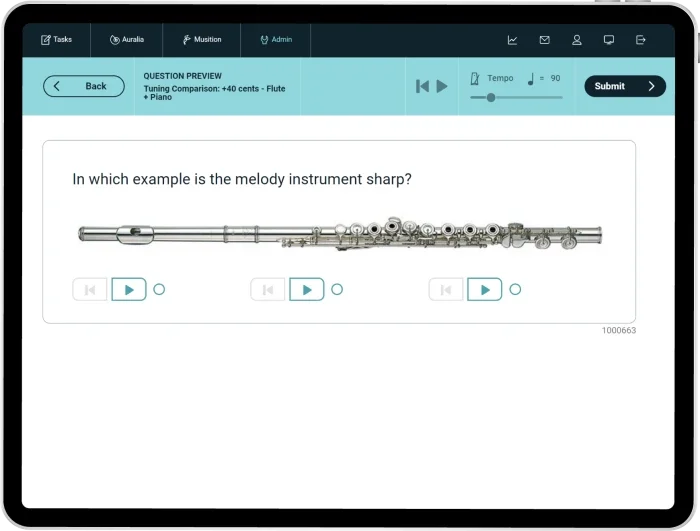
I’m really excited to announce the launch of a brand new beginner band curriculum for music theory and ear training, now included in Auralia and Musition and the MusicFirst Classroom. This new Beginning Band Course is available as part of MusicFirst’s Performance Solution and is designed to support the earliest stages of band instruction with structured, developmentally appropriate musicianship learning. If you are a current MusicFirst Classroom user, you will find this new course, as well as the new Beginning Orchestra course, in the MusicFirst Content Library under the Band and Orchestra categories, as of today.

The Most Important Map in US Music Education History
Yesterday on Facebook, Bob Morrison posted this map alongside the following text:
Ever wonder what music education across the country looks like? Here you go. The first-ever map of access to music education for the entire nation was compiled from the Arts Ed Data Project. This is a US map of COUNTIES. Each county is colored based on the percent of SCHOOLS offering music in that county. The darkest blue is 100%. The darkest orange is 0% or near 0%. Very light blue is 50%. What patterns do you see? HT to the extraordinary David Wish for his question several years ago. PS - It only took my team and I 20 years to build this! Special thanks to The Music Man Foundation, CMA Foundation, and the William and Flora Hewlett Foundation for the support to make this possible!
For those of you that don’t know Bob, he is a FORCE in music education. Bob is the Founder of Music for All, was the founding CEO of the VH1 Save The Music Foundation, served as the Director of Market Development for the NAMM, where he helped create the Mr. Holland's Opus Foundation and was recognized for his work add the arts as a core subject to the nation's education goals. He is the Founder and CEO of Quadrant Research, the nation’s leading arts education research organization, and a recognized pioneer in statewide arts education status and condition research. This map comes directly from his work on the Arts Ed Data Project.

Resource: Whack Em All!
Sometimes you find music resources on your own by searching for them or seeing a post from another music educator, and sometimes you learn about them from people sitting in the front row at one of your sessions at a conference. Meet Whack Em All - a fantastic YouTube channel that is filled with engaging play-a-long videos for Boomwhackers that a teacher at my modern band session told me about this past Saturday. She was telling me that she plays pop music with her elementary students using this channel. Whenever I hear about new resources directly from the mouths of teachers who actually use them, I get excited. I actually told her, and the audience, that I would be writing about it today. As music teachers, we spend a lot of time looking for relevant and engaging resources that will help music come alive for our students. But what captures students’ attention? What motivates them to engage? What makes music feel connected to their everyday lives rather than confined to the classroom? Increasingly, the answers to those questions live online, often in places we would not traditionally label as “music education.” This YouTube channel, Whack Em All, created by Kristoffer Widerberg with art by Thanya Widerberg, is one of those places.
Ear Training & Music Theory: There’s An App for That!
Yesterday at the 2026 Michigan Music Conference, I had the chance to present a session with a title that probably made a few people smile knowingly: “Ear Training and Music Theory: There’s An App for That.” It was a packed room, which tells me something important: music educators want to teach theory and ear training well, but time, logistics, and competing priorities often get in the way. The central challenge we talked about is one every director recognizes immediately. Rehearsal time is limited. Performance demands are relentless. And yet, we all know that ear training and music theory aren’t “extras.” They’re foundational skills that directly impact intonation, sight-reading, rhythmic accuracy, musical independence, and long-term student success.
New Beginner Orchestra Course from Rising Software
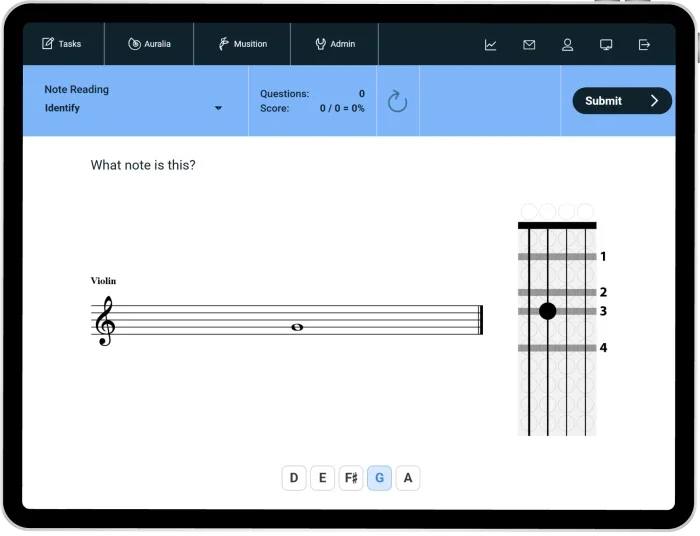
January is filled with music educator conferences around the country and the world. I’ve spent nearly 30 years presenting sessions at these events and I’ve noticed something. Although string programs are a HUGE part of American music eduation, they are often the smallest part of a conference. They also often feel left out of dedicated music technology solutions. At MusicFirst we’ve always tried to provide the best tools for ALL aspects of a music program - including strings. The recent launch of the Beginner Orchestra Curriculum in Auralia & Musition is a perfect resource for beginning string players. Rising Software, a part of MusicFirst, has once again shown what it means to listen closely to the needs of music programs and respond with heart, insight, and genuine support for musical growth.
Finding the Balance
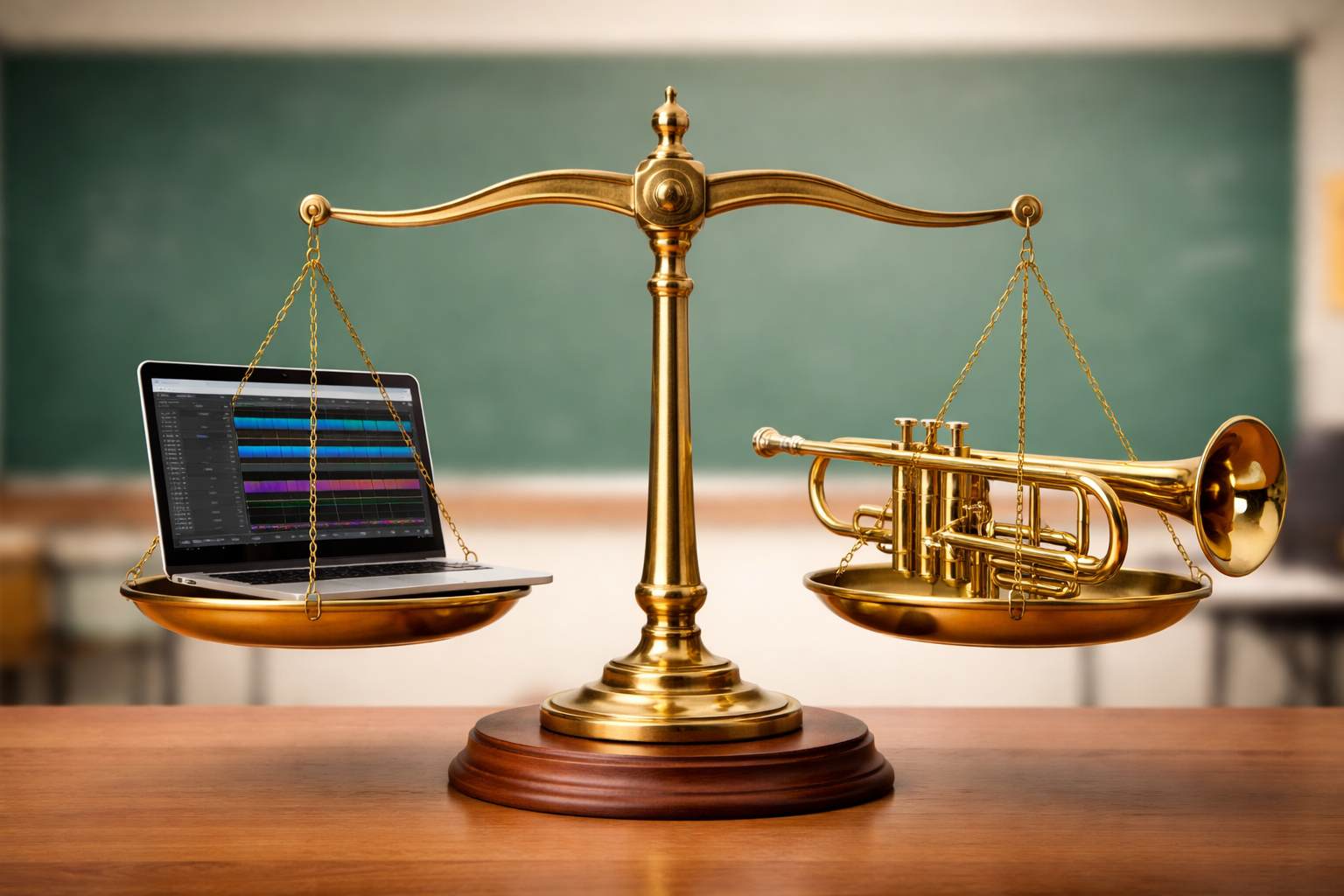
There is a moment every music teacher knows well. It’s something that I personally experience quite often. You discover a new piece of technology, a shiny new app or tool, and for a brief moment it feels like it might be the answer to everything. Engagement. Assessment. Differentiation. Grading. And then reality sets in. Some tools stick. Some do not. Some genuinely improve teaching and learning. Others quietly disappear after a semester or two. That tension is not a failure of technology. It is a reminder of what our job actually is. Technology in the music classroom should never be the point. It should always be the support.

Resource: Ryan Leach Teaches Composition
As music teachers, we are often encouraged to get our students to compose music using a variety of tools: notation tools such as Flat for Education or Noteflight and digital audio workstations like Soundtrap and YuStudio. The problem is that many music educators have either never composed music themselves OR were never taught effective pedagogy for teaching composition. It’s very similar to improvisation - if you’ve never done it yourself, it’s a little tricky to teach others. I have trained thousands of teachers how to get started with composition in their classrooms, and one of the first things I discuss is coming up with prompts to get students inspired. A picture, a poem, a current event, etc. II recently came across Ryan Leach’s YouTube channel and found one really great video titled “12 Composition Exercises to Get Inspired, Beat Writer’s Block, & Write More Music.” It’s a wonderful overview of ways to get started with composing music - especially if you have writer’s block. In the same way that we encourage students to listen deeply and think critically, Leach gives practical, immediate exercises that push young composers to start composing right away, wit a variety of helpful suggestions on how to get inspired.
Resource: Cello Drones
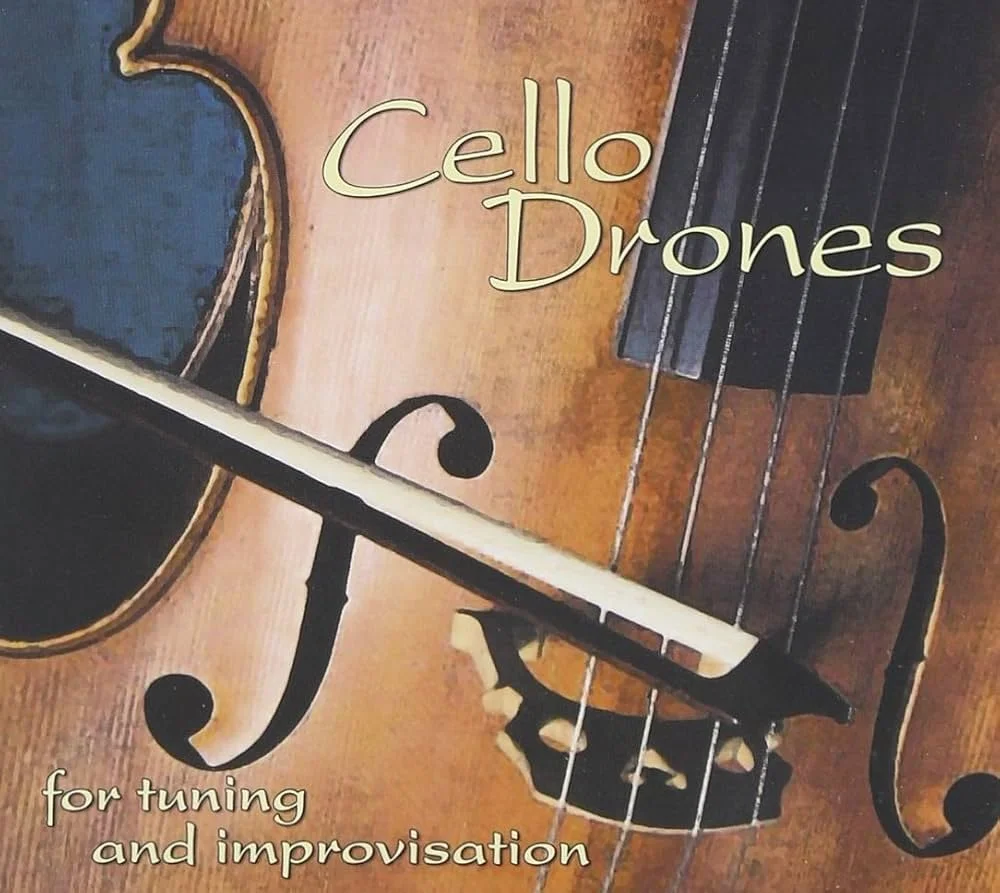
Sometimes the best tools for music educators really are the simplest ones. Last night, while interviewing Jamin Hoffman, a brilliant music educator from Wisconsin, we were talking about the ways he uses technology with his high school string students. While Jamin use of many of the tools available in the MusicFirst Performance Bundle, what really stopped me in my tracks was a resource he mentioned almost in passing: Cello Drones. If you’re not already familiar with it, Cello Drones is about as stripped-down as a teaching tool can get. It’s a free YouTube resource consisting of a cello sustaining a single pitch for six minutes. No visuals. No interactivity. No flashy interface. Just a beautifully centered drone played by a cello. Jamin uses these videos to help his students tune themselves while listening to the drone, and the more I thought about it, the more I realized how powerful this approach is—not just for string players, but for developing musicianship across the board. Teaching students how to tune to a drone is one of those skills that pays dividends far beyond the tuning process itself. And the best part? All you need is a way to hook up the audio from your computer (or phone) to room speakers so that your students can hear it - no need to project the video at all. There’s even an album on Spotify that your students can use when they’re practicing!
What Music Teachers Wish Policymakers Actually Understood
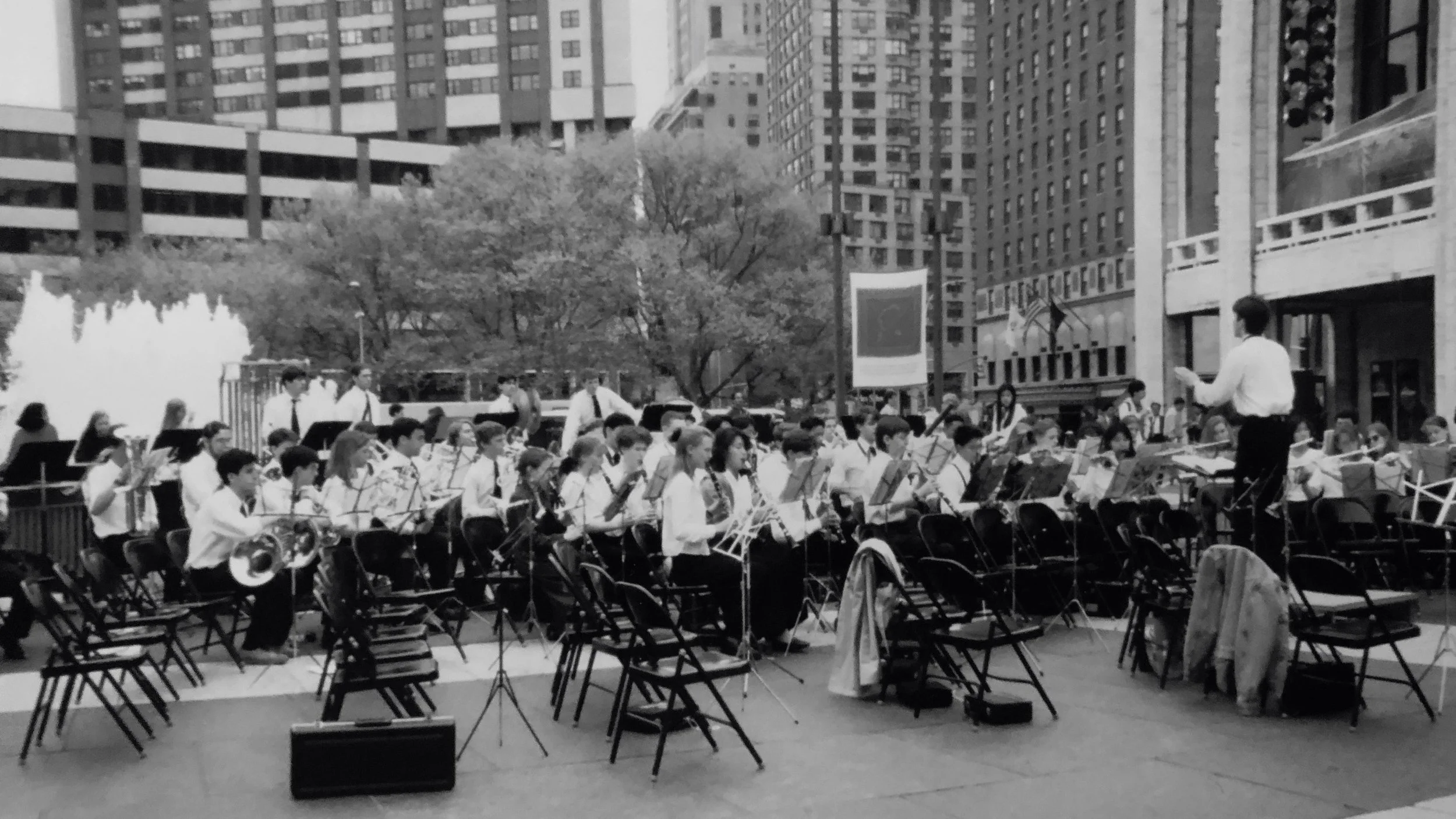
If you want to understand the health of a music program at any school, don’t t start with the concert. Start with the rehearsal schedule. Time is the foundation of everything in music education. Rehearsal time is not a convenience; it is the primary instructional resource. Musical literacy, ensemble cohesion, individual growth, and performance readiness all depend on consistent, uninterrupted learning experiences. Yet music classes are frequently the first to lose minutes to testing schedules, assemblies, rotating block calendars, and other disruptions that appear reasonable in isolation but are devastating in accumulation. It used to happen to me all the time when I taught in the New Jersey Public Schools. No other programs - at least at my school - had the same thing happen to them. God forbid if a student missed phys ed! Music learning is cumulative and physical. Skills develop through repetition, listening, reflection, and shared experience. When administrators mess with our schedules it undermines that process in ways that are not immediately visible but are deeply consequential. But it’s “only music”, right?
The School of Rock Method Books: Helping You Build a Modern Band Program
One of the biggest challenges in launching a Modern Band program is not student interest. It is structure. It might also be the fact that most music educators were either never trained on how to actually teach a modern band, let alone actually play in one while they were in school. Like any formal program, teachers rely on materials that work during the school day as well as help students learn how to play their instruments, and these materials become even more important if the teacher doesn’t have experience playing those instruments themselves. When I taught an after school modern band program in the last year of my teaching, I simply didn’t have any materials for my students. I relied solely on the way that I learned how to play rock music - peer to peer mentoring, listening to a song over and over, and slowly but surely rehearsing with my friends in an unstructured environment - usually in a basement or a garage. When we created the Modern Band Bundle at MusicFirst, I wanted to find a valued partner and trusted print resource to help students (and their teachers) learn how to play guitar, bass, keys, drums and vocals in a structured way - but honoring the modern band philosophy. That’s why we partnered with School of Rock to bring the School of Rock Method books into PracticeFirst powered by MatchMySound, alongside the MusicFirst Classroom, and the numerous chord charts from the MusicWill Jam Zone provides a practical system that addresses all of those needs without requiring teachers to build everything from scratch.
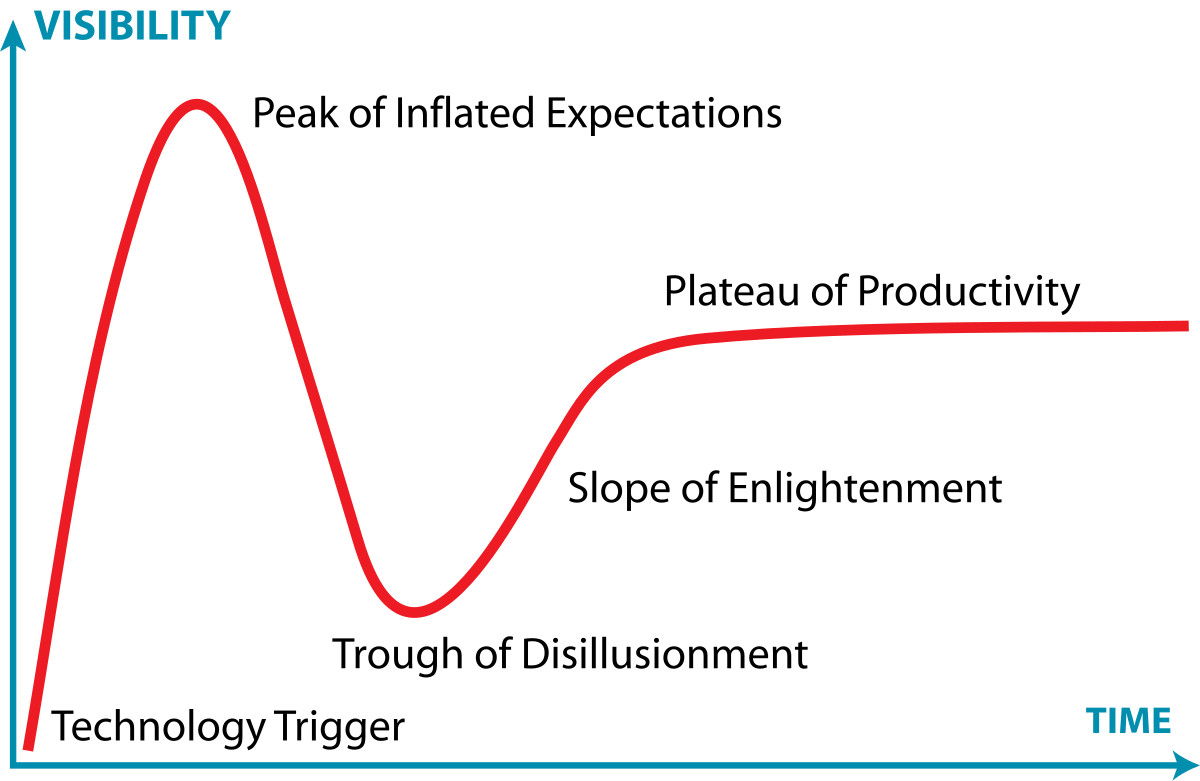
From Inflated Expectations to Informed Practice: AI’s Next Chapter in Education
I was recently asked at a family gathering over the holidays about the true potential of AI in education and whether or not its been overhyped. I’ve read a LOT about this exact topic, and I’m starting to develop a clearer idea of where this is all heading. Here’s my perspective at the start of 2026: it is finally getting easier to say the quiet part out loud about AI in schools. The technology is real, the potential is real, and the marketing has been wildly optimistic, but if you want a framework that explains why so many educators feel both energized and underwhelmed at the same time, the Gartner Hype Cycle is a helpful lens. Not because it predicts the future with precision, but because it describes a pattern we have lived through repeatedly with education technology. A new technology appears, expectations soar, reality intrudes, and then, if we are patient and thoughtful, the technology settles into something genuinely useful.
Happy Public Domain Day 2026!
Every January 1st, we get a little cultural holiday that does not involve confetti or gym memberships. It is called Public Domain Day. On January 1, 2026, the United States public domain takes a meaningful step forward as works published in 1930 become free for all of us to copy, share, perform, arrange, remix, adapt, and reimagine. For music educators, there is an additional reason to pay attention. Sound recordings first published in 1925 also enter the public domain this year. The reason that I always mention this at the beginning of each year is that many of the projects that we do with our students as well as the music we perform with them is directly impacted by whether or not it is in the public domain. I’ve always been very interested in copyright law, specifically with what you can and can’t do with copyright protected content, so when things enter the public domain, I feel the need to highlight the new batch of “stuff” that you can now use with your students.
Lesson Plan: New Year, New Sounds
The first few days after the holiday break always feel a little different. Students come back older, louder, and full of stories, and everyone—teachers included—is trying to reset their rhythm. Rather than jumping straight into scales, worksheets, or procedures, this lesson starts by asking students to think about the idea of a fresh start and how music can represent change. Using the Creativity Solution from MusicFirst, you can use this lesson plan that Ive written about resolutions to get the new year off to a great start.
Resource: The Well-Tempered Synth
I recently came across a YouTube channel called The Well-Tempered Synth, and I immediately went down a DEEP rabbit hole - watching dozens of videos before coming up for air. The channel features well-known classical works by composers like Bach, Chopin, and Shostakovich, but instead of being played by a piano or orchestra, the music is performed using synthesizers and paired with simple, clear visualizations. Hearing and seeing familiar pieces presented this way is both engaging and surprisingly hypnotic. It’s also fascinating to see the shapes of the melodies, counter melodies and bass lines interacting. It’s a different way to experience music students may already know, and it naturally encourages them to pay closer attention to what’s happening in the music. I personally think you should bookmark this channel right now and look for ways to incorporate it into your teaching. Here’s an example that features my all-time favorite Invention by J.S. Bach: